AI Species Identifier (Plant/Bug/Animal)
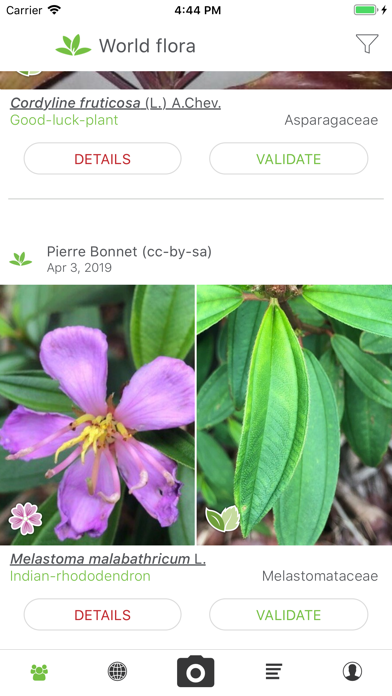
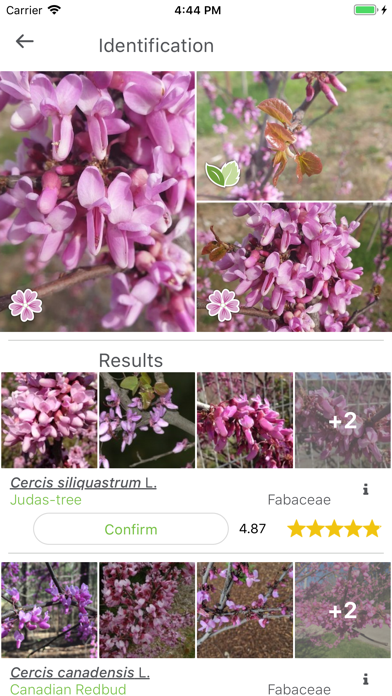
This category lives on a single gesture. A person is standing in the garden, on a trail, or in their own kitchen, sees an unfamiliar plant, bug, mushroom, or bird, and wants to point the camera and read the name a second later. Everything here revolves around whether the answer landed or not, and that is exactly where the market splits. The first and largest slice is plants. Here the subscription mainstreams rule: , , , , Greg, with a crowd of nearly identical clones alongside (PlantMe, Plantiary, Plantaria, , ChatPlant, Ficus, Lily). People write the same thing over and over: I photographed my tomato, it called it a cucumber, then a zucchini, then oregano, three shots of one plant give three different answers, accuracy is about eighty percent and I do not trust even that, now I double-check through Google Lens and it is more accurate. Plants also carry a second job on top of identification, care: water it, diagnose the disease, save the plant, and right there is the main complaint, that the watering schedule is random, the diagnosis is generic for every disease, and the treatment sits behind a lock. The second slice is birds, and it is built differently. There are two camps here. The free, respected tools Merlin from Cornell and Seek/iNaturalist, which people adore, but after an update Merlin's autosave broke and sound identification started missing even loud birds right next to you, and after a model change in 2025 Seek started getting it wrong three times out of four and calls any flower a dicot. And the paid sound identifiers (Bird Sounds Call ID, ) that catch a bird by its song but constantly name European and Asian birds where a person is standing in Pennsylvania, because they do not know the location, plus they charge money for what Merlin does for free. Living apart is a niche but loyal layer of photo identification for bird photographers (, ), where a second pair of eyes checking your shot is valued. The third slice is insects and mushrooms, the riskiest by consequence. The real trouble with and is that a fly turns into an aphid, and a safe grocery-store mushroom gets called poisonous, and the other way around, and meanwhile the mushroom app removed the edible/poisonous verdict and left a generic disclaimer, the very thing people were paying for. With bugs the eternal pain is that you cannot fix a wrong answer and add your own species. The fourth slice is the identify-anything generalists (, LensAI, ) that sell one app for plants, bugs, coins, antiques, and dog breeds, but precisely because of that breadth they miss on the small stuff: they called a snake the wrong species, which is deadly, and identified a basset breed as a dachshund. Running through all four slices like a red thread is the same failure of the leaders: the single gesture the person installed the app for is locked until payment. You write free in the name, let them shoot one frame, and put a subscription wall on the result, often also charging the annual amount on the first day of the trial. The moment of need for people is one-off (found a strange bug in bed at three in the morning, saw a poisonous flower near the kids, a mushroom in the woods), and they are being sold a monthly habit, and that hurts trust harder than any identification error.
Market overview
sets the tone of the market: a giant with over a million ratings that turned the identify-plus-care bundle into a standard, and along with it the whole set of grievances around trials and charges.
- Size
- 2,263,244ratings across 48 apps · 16,783 reviews read
- Concentration
- 64%of all ratings held by the top three
- Downloads
- 131 M+installs across the top 12 on Google Play, led by PictureThis - Plant Identifier
- What people pay
- $30$10/wk$8/wk$30/yrprices cited in real reviews
- Leaders
- Revenue estimate
- What the niche's top apps make a year. The number opens together with the ideas. Unlock
- Trust
- 34 of 48apps where the storefront star diverges from review text; this is a review signal, not proof of manipulation. 1 score above 80
- Discoverability
- 59 of 100a new app's chance to break in: the top three hold 64% of ratings, 27% of the sample has a large star mismatch, 4 score above 80Computed from leader concentration, gamed share, count of strong apps and demand size. Rough, order of magnitude.
- Money
- Who pays in this niche, for what, and why most players lose money. It opens together with the ideas. Unlock
The players here fall neatly into five types. The first is the subscription plant-conveyor studios: , , , , plus dozens of nearly identical clones under different names. They win on reach, pretty design, a care plan, and watering reminders, and they lose on cutting off the single shot with a subscription wall, charging money on the first day of the trial, and giving generic, not always accurate care that makes people literally kill their plants. The second type is the respected free tools from science: Merlin from Cornell Lab, Seek and iNaturalist, . They win on trust, accuracy, and being free, but they infuriate people by breaking familiar things with updates (Merlin's autosave fell off and the sound went deaf, Seek's new model lies three times out of four, suddenly blocks by country and IP), force you to create an account just for a list, and lead you into the field with no internet. The third type is bird sound identifiers (Bird Sounds Call ID, ): they catch a bird by song but serve up birds from the wrong continent because they do not know the location, lose recordings without a connection, and charge money for what Merlin does for free. The fourth type is narrow photo identifiers for bugs and mushrooms (, , ): they give a fast answer but do not let you fix an error, and for mushrooms they cut out the edibility verdict that people bought them for. The fifth type is the know-it-all generalists (, LensAI, ): one scanner for everything from coins to dogs, handy to have it all in one place, but because of the breadth they miss on species and breeds where the cost of an error can be dangerous. The common hole across all of them: give an accurate answer on the first frame for free and without lying about free, honestly say I am not sure instead of making something up, work in the field without a connection, and handle care and collection like a human.
Main players
App Store · United States · Aug 30, 2026
plant identifier · 5 / 18


Keywords in this sample
- plant identifier #1
- mushroom identifier #4
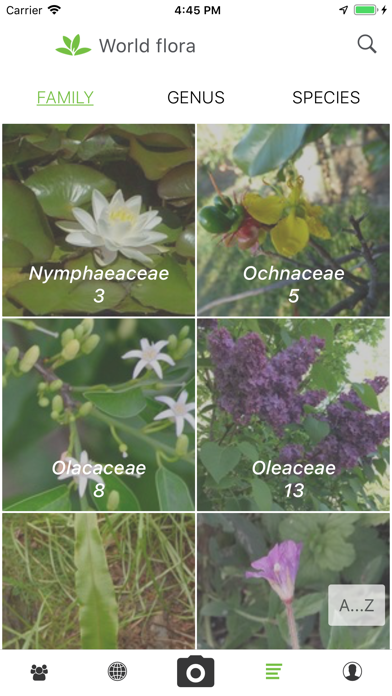
Keywords in this sample
- plant identifier #2


Keywords in this sample
- plant identifier #3
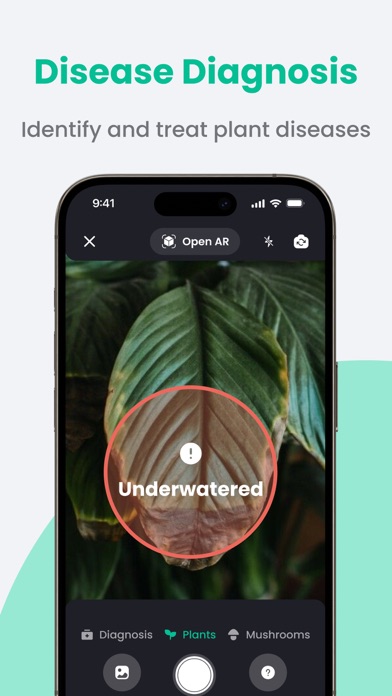
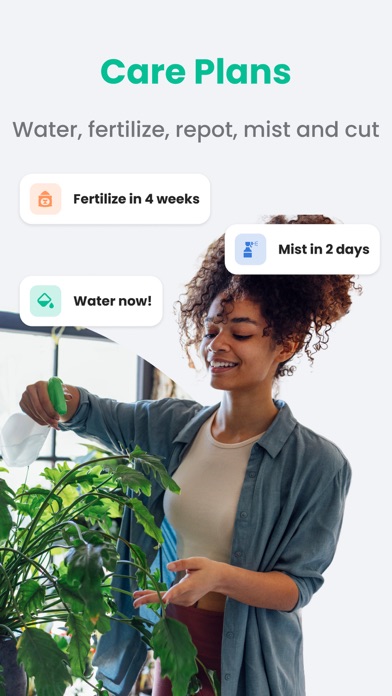


Keywords in this sample
- plant identifier #4
Keywords in this sample
- plant identifier #5
- insect identifier #2
- bird identifier #8
- animal identifier #1




Data & sources
App Store search: Aug 30, 2026 · 5 queries · 48 apps. An app’s keywords show only positions found in this sample.
Positions follow Apple’s Search API response and may differ from results on a device. Rating counts are not installs or market share.
Screenshots come from the US App Store. Data is a saved snapshot, not a live feed.
Search data source ↗Audience
"AI Species Identifier (Plant/Bug/Animal)" is not one customer. Inside are different people with different jobs, and they pay very differently. First you choose who you build for.
Where the money is
Where users come from
Channels visible right in the reviews: people say themselves how they found the app and why they installed it. This is the niche's distribution.
Word of mouth: friends, family, school6
People arrive on a direct tip from a real person: a friend, a school mom, a buddy. It often comes as a concrete comparison like «try this one, it works better». A new app needs to earn the retelling more than it needs ad spend.
Even my friends who spend the least time outside love Merlin as soon as I tell them about it, and pull the app up any time they hear a bird singing!
Another mom from school suggested trying the Bug ID app, as it not only identifies insects but also provides detailed information about them.
Store search for the task5
Someone hits a concrete thing (a bug in the bedroom, an unknown flower, a tree in the yard) and heads to store search for a «free identifier». The first screen and the word free in results decide it, not the brand. Target the real trigger and do not lie about being free.
I searched for a free app. This one makes you give a credit card to get a free trial for one week. So it isn't free.
Wanted to know what they were so looked for app to identify them. This one had good rating so I got it.
Social and video ads4
A visible share installs after an Instagram clip or online ad that shows a slick scan of grass or a leaf. The catch is the ad promises more than the app delivers, so people leave angry. Ads bring installs, but overpromising in them backfires.
I've purchased the subscription based on an advert I saw on Instagram. It was quite straightforward video how this app would recognize the plant and would give very specific advice.
Kept seeing the ad for the app, scanning grass in the yard and identifying issues. Set up the trial, took several pictures of my dying struggling lawn.
Switching from a worse app4
Part of the audience flows between identifiers: they drop an inaccurate or paywalled one and hunt for a replacement, often landing on free Merlin or iNaturalist. The way in for a newcomer is someone else's accuracy failure, not an empty market.
I'm going to try the iNaturalist app instead, made by the same folks, which I hope works because I do feel so grateful for all I've learned from the Seek app.
The Merlin ID app by Cornell university is free. I downloaded this one because it advertised identify bird by feathers... No thanks! I'll stick with the free one that's better.
Review-based rating
The same sample of 48 apps in two scoring systems. Switch to see how the storefront star aligns with what people write in reviews.
 Merlin Bird ID by Cornell Lab4.9 in store · rating aligns · 108,575 ratings82our scoreFrom the Cornell Lab, and its core job is identifying birds by sound on a walk, which genuinely pulls people into birdwatching and gets them outside more. But recent updates slipped: sound ID now misses even loud birds, the switch from auto to manual saving annoys people, and the mandatory email registration and buggy login ruin the moment when a bird is about to fly off.
Identifying birds by sound, drawing people into birdwatching, ease of use, being free, history of identified birds
Degraded sound ID after updates, manual saving instead of auto, mandatory email registration, login glitches and occasional crashes
Nature lovers and beginning birdwatchers who want to recognize birds by their song on a walk without paying
 PlantNet4.6 in store · rating aligns · 7,018 ratings78our scorePeople value it for accuracy and being free, using it for years on walks and in the garden to tell flowers from weeds before anything blooms. It breaks on two fronts: US users started getting hit with IP-based blocks, and it only identifies the species, it does not tell you how to care for the plant. Anyone expecting watering and feeding advice will find nothing here.
Identification accuracy, works from leaves and flowers, regional search, geotagging, free to use
IP blocking for US users, no plant care guidance, interface gets more complex with updates, controls disappear when identifying a second plant
Gardeners and nature lovers who need an accurate species ID, not a care plan
 iBird Photo Sleuth4.7 in store · rating aligns · 787 ratings72our scoreHere recognition genuinely works: people use it as a second opinion to confirm their own guess, and it often lands even on poor or distant shots, pointing toward the right answer when it errs. Complaints are not about accuracy but money and confusion: paying twice, buying a separate app on top of iBird Pro, and the feature vanishing after a reinstall. Some compare it unfavorably to Merlin.
Accurate ID even on poor and distant shots, works as a second opinion to confirm, lots of reference info, constantly updated database, useful for novices
Have to buy it twice and as a separate app on top of iBird Pro, feature vanished after reinstall, Merlin sometimes more accurate, broken feedback contact
Bird photographers and growing birders who need to confirm an ID from their own photo
 Picture Insect: Bug Identifier4.6 in store · rating aligns · 43,057 ratings70our scorePeople identify beetles, butterflies, and bites right in the field, keep a personal catalog of found insects, and return to the app again and again. Identification is more often right, but experienced entomologists catch errors around half the time even on local species, you cannot fix a wrong ID, and getting in runs into a paid trial and constant upgrade pop-ups that let the bug get away.
Identifying beetles, butterflies, and bites in the field, a personal insect catalog, info on danger to people and pets, frequently correct identification
Errors around half the time for experienced entomologists, cannot correct a wrong identification, different names for the same insect, paid trial and pushy upgrade pop-ups
Nature lovers and gardeners who want to identify insects and bites on the spot and keep a catalog of their finds
 Audubon Bird Guide4.3 in store · rating aligns · 4,508 ratings68our scoreA respected old guide loved for its offline content, maps, sounds, and many photos, used for years to watch birds. It breaks offline: the downloaded field guide stops loading without internet, the very thing people downloaded it for. People are also annoyed by the new account requirement and the lack of bird identification by sound.
Offline content, maps and sounds, many species photos, sighting log, responsive developers
Offline guide fails to load without a connection, new account requirement, no ID by bird sound, search glitches after updates
Birdwatchers who want a reference with an offline mode and a log, not sound-based recognition
 Picture Bird: Bird identifier4.7 in store · rating aligns · 39,227 ratings62our scorePeople identify birds by photo and song, and some learn to recognize birds in real life from it, while others use it in wildlife rehab. But sound ID visibly jumps around, the same bird gets three different names, photo ID is wrong for many, and the comparison with Cornell's free Merlin is unflattering, plus the paid subscription is hidden behind a tiny cross.
Identifying birds by photo and song, ease of use, usefulness in wildlife rehab, learning to recognize birds in real life
Unstable sound ID, different names for the same bird, photo-ID errors, subscription hidden behind a tiny cross, losing out to free Merlin
Beginning bird lovers who want to identify birds by photo and sound, if a paid trial does not bother them
 Picture Mushroom: Identifier4.7 in store · rating aligns · 23,773 ratings62our scoreMany consider Picture Mushroom the best fungi identifier, use it for years, and praise the quality of the AI and the learning content. Two sore spots repeat: they removed the edible-versus-poisonous label and replaced it with a generic warning, pushing some people away, and the same mushroom photographed three times gives three different answers. The 30-a-year price for rare use and the inaccurate location tagging also annoy.
Accurate mushroom identification and good AI, learning content and species cards, a collection of finds, a habit of years
Removed the edibility label, gives different answers on repeat photos of the same mushroom, pricey for occasional use, inaccurate location tagging
Foragers and fungi lovers who want a reliable identifier as a first step, with mandatory edibility double-checking
 Birda - Bird Watching, Birding4.7 in store · rating aligns · 2,011 ratings62our scoreBirda is loved as a social network for birders: a photo feed, comments, badges, challenges, and list-keeping, great for people who want to share rather than just tick boxes. Its one clear weak spot is that the AI photo identification works poorly, so people leave to double-check in Google or Merlin. It can also be sluggish and requires location to be on.
Social feed with photos and comments, badges and challenges, sighting lists, eBird import, identification by both photo and sound planned
Weak AI photo identification, lag and freezing, requires location to be on, no sound identification yet
Birders who value community, photo sharing, and list-keeping over accurate auto-identification
Next: the review findings
You already see the market, the audience and the honest rating. A free sign-in opens the first finding: what people value, what drives them away and why, with quotes.
Free, by email or Telegram