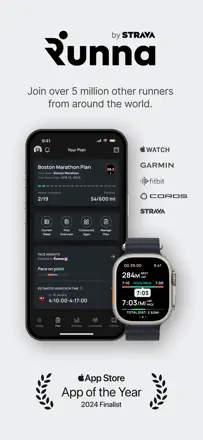
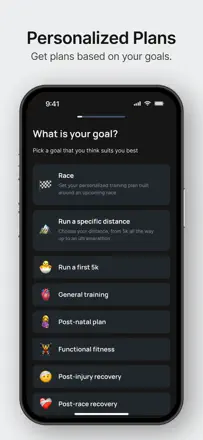
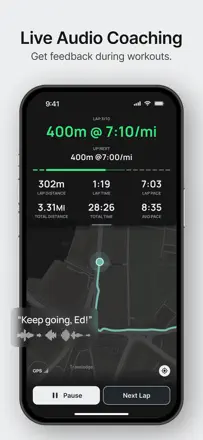
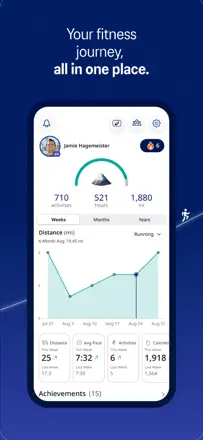
A Runna author writes that marking a run “too hard” did not change the next session. It helps to show how the feedback was taken into account and what can be changed by hand.
Which apps people use
These apps are mentioned in the breakdown of this job. Open each one to compare strengths and limits. The order of the list is not a ranking of fitness.
Rank 3. Review score: 72 out of 100. App Store rating: 4.9★ · 31,019 ratings
72of 100
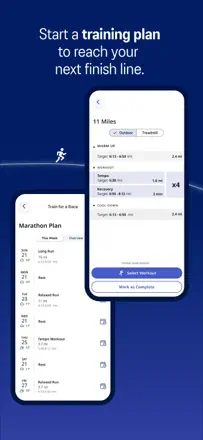
A structured training planner focused on "what to run today" with schedule adjustment. Strong on weeks-ahead planning and real-time pace cues. Weak on adapting the plan to feedback, GPS sometimes differs from Garmin by 400 m, and support is lacking.
Praised: A clear training calendar removes the "what should I run today" question. Speed up or slow down cues delivered mid-run. Moving days around without losing progress. Users who started from zero run 5K nonstop within a month.
Complaints: "Too hard" or "distance too long" feedback does not always change the next session, the plan keeps increasing load. No injury pause mechanism, vacation mode is a workaround. Audio coaching lowers music volume and never restores it. A run accidentally pauses in a pocket with no warning.
Best for: Runners with a base fitness level preparing for a specific race (5K, half marathon, marathon). Those who want a training block structure, not just run logging.
Rank 9. Review score: 66 out of 100. App Store rating: 4.8★ · 414,824 ratings
66of 100
A primary GPS running tracker with training plans and audio coaching. Conceptually strong, but persistent GPS accuracy issues consistently hurt the experience.
Praised: Guided runs with a coach voice hold your pace and keep your mind engaged. Race-specific plans (marathon, 5K) are structured and progressive. Progress tracking is clear.
Complaints: GPS periodically loses up to half a mile per run, especially when paired with Apple Watch. Completed runs sometimes do not register in the plan. Auto-pause triggers during a run with the screen off.
Best for: Beginner and intermediate runners who want a structured plan and voice guidance with no subscription fee.
Rank 18. Review score: 60 out of 100. App Store rating: 4.8★ · 375,580 ratings
60of 100
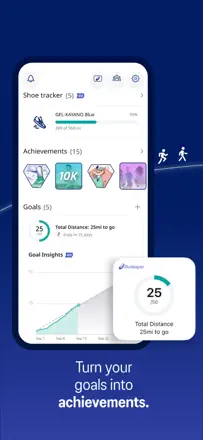
A full-featured running tracker with route history, shoe tracking, and training plans. Degraded in sync quality after the ASICS acquisition.
Praised: Shoe mileage tracking is a feature that is hard to find in competitors. History filtering by duration and date is handy for race prep.
Complaints: Apple Watch sync is unreliable: pausing on the watch does not carry over to the app. The transition to ASICS deleted some users' data without warning.
Best for: Regular runners who track shoe wear and prepare for races based on their history.
Rank 14. Review score: 62 out of 100. App Store rating: 4.8★ · 362,278 ratings
62of 100
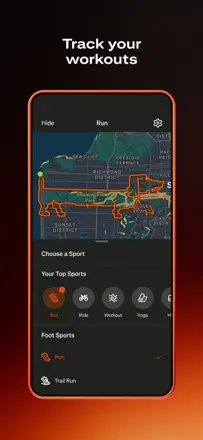
A dedicated multi-sport GPS tracker focused on community and segments. The running side is solid, but GPS accuracy is unstable on hikes.
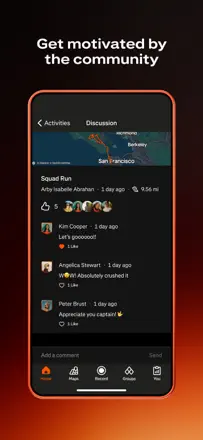
Praised: The KOM/QOM segment system adds competitive context even to solo workouts. The social feed with friends' activity creates a genuine sense of community.
Complaints: GPS on a hike sometimes cuts 13 miles out of 20, which is a critical gap. Privacy defaults are opaque: activities are public by default and users are not warned at setup.
Best for: Runners and cyclists who care about segment competition and social context. Not suitable as a primary hiking tracker.
Rank 7. Review score: 68 out of 100. App Store rating: 4.9★ · 38,470 ratings
68of 100
A reliable progressive couch-to-10K program with a clear walk/run interval structure. Plans are time-based, not distance-based, which disappoints more experienced users. Adapts to how you feel, but offers no pace guidance, no progress reset, and no flexible goal setting.
Praised: The walk-to-run interval approach gradually builds endurance without overloading. The app offers to repeat a failed workout with adjustments based on how you felt. Audio cues do not interrupt music. Proven mechanics: users come back after years-long gaps.
Complaints: The program runs on time, not kilometers: you finish "10K" having actually run about 5.5 miles. No pace recommendations, the plans do not explain how fast to run. You cannot reset progress or change your goal mid-course. On-screen buttons for pause and skip activate accidentally in a pocket.
Best for: Beginning runners with no base who need a clear multi-week structure, not free tracking. People recovering from injury or a long break.