Authors discuss overloaded metrics and clipped imports. It helps to show the original intervals, the source and a way to correct a record.
Welche Apps genutzt werden
Diese Apps werden in der Analyse dieser Aufgabe genannt. Öffne jede, um Stärken und Grenzen zu vergleichen. Die Reihenfolge der Liste ist keine Rangliste der Eignung.
Platz 8. Wert aus Rezensionen: 68 von 100. App-Store-Bewertung: 4,7★ · 61.347 Bewertungen
68von 100
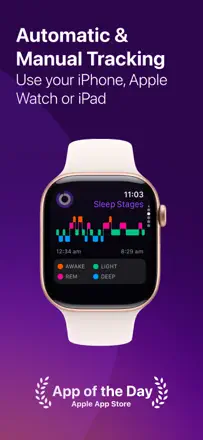
An automatic sleep tracker via Apple Watch that requires no button presses. It collects more data than the built-in Apple Health, including breathing rate and detailed sleep stages, but after updates it periodically loses sessions and overstates wakefulness.
Gelobt: Users with apnea use it to catch oxygen drops and go to their doctor with real data.
Kritik: The interface is overloaded: 12 metrics on one screen with no explanations, and the smart alarm is awkward to activate from the Watch.
Für wen: Apple Watch owners who want automatic tracking without manual start
Platz 33. Wert aus Rezensionen: 55 von 100. App-Store-Bewertung: 4,4★ · 95.540 Bewertungen
55von 100
A sleep tracker via Apple Watch with phases, nighttime sound recording, and blood oxygen. Phase accuracy is acceptable, but the app misidentifies sleep during low activity and forces a trial subscription from the very start.
Gelobt: Longtime users value the sleep quality visualization and nighttime sound recording through the Watch.
Kritik: The algorithm confuses lying still with deep sleep and falsely logs driving in a car as sleep.
Für wen: Apple Watch owners who want sleep phases and nighttime sounds in one place
Platz 49. Wert aus Rezensionen: 51 von 100. App-Store-Bewertung: 4,7★ · 61.263 Bewertungen
51von 100
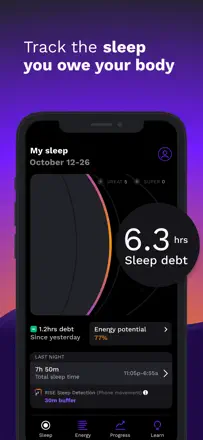
The app is built around the concept of sleep debt and predicts energy peaks throughout the day. The idea is sound, but Apple Health imports truncate sleep sessions by several hours and the AI coach repeats the same questions instead of working with data already entered.
Gelobt: Users with children appreciate reminders about their real sleep schedule and the deficit estimate.
Kritik: The algorithm handles split sleep and shift schedules poorly and loses sleep blocks during import.
Für wen: People who want to understand their chronotype and manage sleep debt across the week
Platz 9. Wert aus Rezensionen: 68 von 100. App-Store-Bewertung: 4,7★ · 26.142 Bewertungen
68von 100
One of the few mobile trackers with a smart alarm that genuinely wakes you during a light sleep phase without cutting into deep sleep. Microphone analysis of nighttime sounds works, and years of data produce trends. Accuracy has declined after recent updates according to some long-term users.
Gelobt: The smart alarm within a set window catches a light phase and waking up feels noticeably easier.
Kritik: Nighttime tracking via the microphone is incompatible with simultaneous white noise playback.
Für wen: People who want to understand their sleep patterns through data, not just mask the silence
Platz 46. Wert aus Rezensionen: 52 von 100. App-Store-Bewertung: 4,4★ · 7.483 Bewertungen
52von 100
SleepScore uses the phone's sonar for contactless sleep phase analysis and generally identifies the moment of sleep onset correctly. The key problem: the developer removed the detailed sleep stage chart from the interface, sharply reducing value for users who tracked their progress.
Gelobt: Users appreciate the contactless sonar-based method and the ability to monitor sleep without a wearable.
Kritik: The removed sleep stage chart stripped the app of its main analytical tool, and the sonar emits an audible high-frequency sound that interferes with falling asleep.
Für wen: People who want basic tracking without a smartwatch