Cosmetic Ingredient Scanner
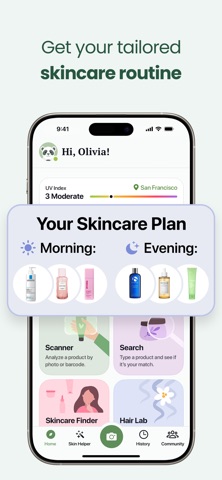
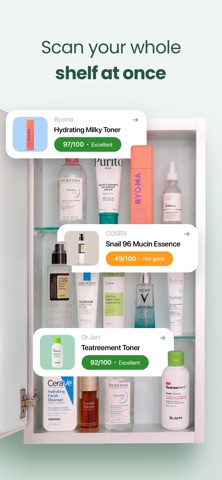
The niche looks like a single genre, point your camera at the ingredient list and get a verdict, but it actually splits into three different jobs, and apps that try to cover all of them at once break on every one. The first job is simple and mass-market: someone is standing in a store and wants to know in a second whether to buy this cream or not. Here everything hinges on trust in the verdict and whether the product is even in the database. Both fail across the board. On Yuka the same product is sometimes good, sometimes bad, people write that the score is rigged and that it flags the weirdest stuff, and another review flatly says to double-check the whole app with skepticism. Olive and have the same illness, the same product with a different score when scrolling the list versus inside the card, the score changes after you pay for a subscription. rates everything 91, so people stop believing it. Olive gives a hot dog 100. It punishes a product for an ingredient that it praises in the next one. The second failure of this same job is that the product simply is not in the database. , people say, does not find half the shelf, does not know Korean cosmetics, EWG picks up 5 to 10 percent of products at Walmart and shows 2016 ratings, and on the products people need are discontinued. honestly says add a photo and wait a couple of days, and that is exactly what reconciles people with it, but in the store right here and now it does not help. The second job runs deeper, it is not good or bad in general but is this safe for me personally. This is where people with allergies and skin conditions live, and they are the most loyal and the angriest at the same time. People with contact dermatitis, eczema, and kids with 300 plus allergens call a lifesaver, and the same people are furious when the database throws false positives or gives a 100 to a product with talc. and Lovi sell a compatibility percentage, and it destroys trust when a favorite product comes back at 0 percent and the worst one at 100, or when the number drops from 94 to 60 out of nowhere after you pay. The third job is not about ingredients at all, it is about the face: Skan, Thea, Lovi, Glow, Mary Kay scan the skin and build a personal routine. This is a separate, most lucrative cluster, and it drowns not in the database but in two things. First, the face-scan tech does not work, dozens of Mary Kay users cannot get the alignment right and take the photo, Skan and Thea freeze on the scan. Second, the whole path is built as a long questionnaire that hits a paywall at the exact moment the person wants to see the result, and that feels like a scam, not a product. Standing apart at the toxic edge are SkinGuru and , which under the guise of an ingredient scanner deliver medical diagnoses from a photo: SkinGuru told someone there was a 92 percent chance of cancer on a child's rash, missed a real cancer on someone else, and people correctly figure out it is just a wrapper over ChatGPT that gives a different answer to the same photo. The winners in this niche are the ones who do not pretend to be the truth but honestly show the breakdown and the source: earns almost straight fives for selling nothing, explaining every ingredient in plain language, flagging what is banned in the EU and Japan, and staying free. wins the same way, with a transparent breakdown of every component and an open database that people add to themselves.
Market overview
Yuka sets the tone as the most mass-market ingredient scanner, but on trust and delight it is outdone by the free .
- Size
- 276,781ratings across 18 apps · 3,854 reviews read
- Concentration
- 70%of all ratings held by the top three
- Downloads
- 23 M+installs across the top 11 on Google Play, led by Yuka - Food & Cosmetic Scanner
- What people pay
- $60/yr$40$39.99$30prices cited in real reviews
- Leaders
- Revenue estimate
- What the niche's top apps make a year. The number opens together with the ideas. Unlock
- Trust
- 9 of 18apps where the storefront star diverges from review text; this is a review signal, not proof of manipulation. 0 score above 80
- Discoverability
- 63 of 100a new app's chance to break in: the top three hold 70% of ratings, 17% of the sample has a large star mismatch, 3 score above 80Computed from leader concentration, gamed share, count of strong apps and demand size. Rough, order of magnitude.
- Money
- Who pays in this niche, for what, and why most players lose money. It opens together with the ideas. Unlock
The niche has three types of players, and each fails in its own way. First, the honest ingredient explainers, and . They win on transparency, explaining every ingredient in human language, showing country-by-country bans, pushing nothing, and keeping access free, so they get the warmest reviews. They fall short on database coverage and speed, has no barcode scanner and whole product categories are unsupported. Second, the subscription mainstreams with a single score, Yuka, Olive, , EWG, , . They give a fast verdict and alternatives but burn on opaque and drifting scores, database gaps, and on the fact that search, once free, is now behind a paywall. People catch one product with two different scores and stop trusting everything. Third, the most lucrative, the face scanners with a personal routine, Skan, Thea, Lovi, Glow, Mary Kay. They sell personalization and skin progress but break on broken face scanning and on capping a long questionnaire with a wall of payment right before the result. Standing apart are SkinGuru and , pseudo-medical photo scanners that hand out diagnoses like cancer and are essentially a wrapper over ChatGPT giving a different answer to the same photo, and their reviews are almost entirely about distrust and demands for a refund.
Main players
App Store · United States · Aug 30, 2026
cosmetics ingredient checker · 5 / 20



Keywords in this sample
- cosmetics ingredient checker #1
- skincare scanner #3
- beauty ingredient checker #1
- skin care ingredients #1
- makeup ingredients #3



Keywords in this sample
- cosmetics ingredient checker #2
- skincare scanner #7
- beauty ingredient checker #8
- skin care ingredients #8



Keywords in this sample
- cosmetics ingredient checker #3
- beauty ingredient checker #9



Keywords in this sample
- cosmetics ingredient checker #4
- beauty ingredient checker #2
- skin care ingredients #3
- makeup ingredients #2


Keywords in this sample
- cosmetics ingredient checker #5


Data & sources
App Store search: Aug 30, 2026 · 5 queries · 34 apps. An app’s keywords show only positions found in this sample.
Positions follow Apple’s Search API response and may differ from results on a device. Rating counts are not installs or market share.
Screenshots come from the US App Store. Data is a saved snapshot, not a live feed.
Search data source ↗Audience
"Cosmetic Ingredient Scanner" is not one customer. Inside are different people with different jobs, and they pay very differently. First you choose who you build for.
Where the money is
Where users come from
Channels visible right in the reviews: people say themselves how they found the app and why they installed it. This is the niche's distribution.
Tiktok and social ads5
People catch the app in their feed: an ad or a creator shows off products and a «free analysis». They install it and then hit a paywall inside.
So I downloaded the app since I found it off TikTok and I loved the beginning, answering questions, taking photos.
So glad I stumbled across the app ad on TikTok!! A must try for
Beauty industry documentary2
Viewers watched a film about the beauty industry and toxic ingredients, the app got a shout-out, and they went straight to download it.
I discovered this app thanks to the documentary 'Not so Pretty' and I am delighted!!! So easy to use and does all my work! Love it!
After watching a documentary on the beauty industry, this app was mentioned. Download it and have been hooked!!
Dirty dozen article1
A reader came across the app while reading about harmful-ingredient lists and the «dirty dozen», then installed it to check purchases for the family.
I had high hopes for this app on helping me make good choices for my family after seeing it when reading about the 'dirty dozen' list.
Review-based rating
The same sample of 18 apps in two scoring systems. Switch to see how the storefront star aligns with what people write in reviews.
 Clearya4.8 in store · rating aligns · 508 ratings80our scorePeople love it for its honesty: it is free, sells nothing, you search a product through Amazon, Target or Walmart and instantly see harmful ingredients with clear explanations and color coding, plus safer alternatives. Many arrived after documentaries and share it with friends. But it sometimes stumbles: some categories are marked unsupported, Walmart items fail to load, and one user caught a missed harmful ingredient, so you cannot trust it blindly.
Free and no selling, clear ingredient explanations and color coding, safer alternatives, search through Amazon and Target, showing bans in the EU and Japan
Some categories unsupported, Walmart items fail to load, sometimes slow, rare misses of harmful ingredients, no barcode scanner
People who want to choose cosmetics and household goods free of harmful ingredients and understand exactly why they are harmful
 INCI Beauty - Cosmetic scanner4.8 in store · rating aligns · 1,212 ratings78our scorePeople love it as an honest ingredient database: you scan a product and see a breakdown of every component, and if a product is missing you add it yourself and wait a couple of days for analysis. It especially wins over those who toss packaging and forget the formula, and parents of kids with hundreds of allergens. The downsides are real but not fatal: intrusive ads get in the way in stores, dark mode breaks readability, and some pricey products are not in the base yet.
Breakdown of each ingredient, ability to add your own product and get it analyzed, help with allergies, reliable and useful information
Intrusive unskippable ads, broken dark mode, not every product is in the database, interface asked to be improved
People who want to understand what is in their cosmetics and consciously avoid harmful ingredients, including families with allergies
 Yuka - Food & Cosmetic Scanner4.8 in store · rating aligns · 96,550 ratings74our scorePeople use Yuka as a quick shelf-side product check and love that it actually changes what cosmetics and food they buy. Trust breaks on the scoring method: identical products get different ratings, additives like MSG get flagged on shaky science, and a macro-solid protein drops to 9 out of 100. On top of that the app sometimes won't load and locks part of its features behind a subscription.
Fast barcode scan at the shelf, actually changes cosmetics and food choices, clear ingredient breakdown, helps pick products that don't cause breakouts
The same product gets different scores, questionable methodology (MSG, protein at 9/100), accusations of bias toward paying brands, app occasionally won't load, some features behind a subscription
For anyone who wants to grasp a cosmetic or food's ingredients in seconds at the shelf and is willing to double-check the odd rating
 Lumi Skin:The Skincare Scanner4.7 in store · some mismatch · 665 ratings62our scorePeople use it to check before buying at Sephora or Ulta whether a product suits their skin, and it genuinely saves them from bad purchases. They value the search, the photo scan, and hints for specific issues like fungal acne. But results disagree with other apps and even with brand websites, the scan quickly hits the free-attempt limit, and sometimes it just loads endlessly and shows no data.
Checking a product before buying in the store, search and photo scan, hints for specific skin problems, help quitting impulse purchases
Results disagree with other sources, few free scans, freezes and fails to load info, some products not in the database
People who want to quickly check a product right in the store before buying and avoid buying extra
 Thea - #1 Beauty App4.8 in store · rating aligns · 14,300 ratings58our scorePeople value Thea for building a personalized routine and especially for checking whether products conflict with each other, and it genuinely cleared some people's acne. It breaks in two spots: the skin score doesn't move even when skin has clearly improved, which undermines trust in the tracking, and the app walks you through a quiz and photos only to hit a paywall with no warning. Plus the 13+ age gate shuts out the younger teens it drew in.
Personalized routine by skin type, checking product compatibility with each other, genuinely helps with acne, photo progress tracking
Skin score won't move despite clear skin improvement, paywall shown only at the end after the quiz and photos, pricey (around 60 dollars a year), 13+ age gate, scan confuses freckles with pimples
For teens and adults with problem skin who want to build a routine and check that products don't conflict
 SkinSAFE: AI Skincare Scanner4.6 in store · rating aligns · 1,760 ratings58our scoreFor people with allergies and dermatitis it is a lifesaver: you scan a product in the store and instantly see if it is safe for your allergen list, which eases real anxiety. But the ingredient data is often wrong, causing either false alarms or missed problems, and the developers do not respond to error reports. On top of that the app keeps logging you out, fails to load product pages, and locks basic functions behind a subscription.
Fast in-store scan against a personal allergen list, calm with dermatitis and multiple allergies, help for those with a medical need
Wrong ingredient data and false alarms, silent support, crashes and forced logouts, product pages fail to load, basics only by subscription
People with contact dermatitis, eczema and multiple allergies who need to check every product for safety
 Think Dirty – Shop Clean4.8 in store · rating aligns · 55,892 ratings55our scorePeople loved Think Dirty for years for letting them scan a barcode in-store and find clean beauty products, and many cleared out their bathroom on its advice. The main pain now is that name search got locked behind a subscription when it used to be free, and many feel misled. On top of that the database is thin: it doesn't find half the products in a store, and buy links point to Amazon.
In-store barcode scanning, helps find clean skin and hair products, actually changes what's in the bathroom, lots of items in the database
Name search moved behind a subscription, thin database (misses half the products), pushy notification pop-up, links point to Amazon, sometimes paying unlocked nothing
For anyone building a clean skin and hair care kit who's willing to pay for name search
 SkinSort - Skincare Scanner4.7 in store · rating aligns · 5,732 ratings54our scorePeople value SkinSort for breaking down ingredients and matching products to skin as a match percentage, and they like reading and leaving product reviews. Trust in the personal score breaks: the match percentage changes retroactively with no profile change, and after paying the product ratings suddenly drop, leaving people feeling cheated. Plus it's more of a search engine than an assistant: it doesn't build a routine or warn about product conflicts, it just shows dupes.
Breaking down unfamiliar ingredients, matching products to skin as a percentage, other people's product reviews, comparing two products, flagging already-vetted products
Match percentage changes retroactively with no profile change, ratings drop after paying, doesn't build a routine or warn about product conflicts, more search engine than assistant, side-by-side comparison moved behind a subscription, inaccurate data versus the manufacturer's site
For anyone who wants to understand ingredients and find products matching by composition, and will build the routine themselves
Next: the review findings
You already see the market, the audience and the honest rating. A free sign-in opens the first finding: what people value, what drives them away and why, with quotes.
Free, by email or Telegram