People looking for a calm practice in an anxious moment
Welche Apps genutzt werden
Diese Apps werden in der Analyse dieser Aufgabe genannt. Öffne jede, um Stärken und Grenzen zu vergleichen. Die Reihenfolge der Liste ist keine Rangliste der Eignung.
Platz 10. Wert aus Rezensionen: 88 von 100. App-Store-Bewertung: 4,8★ · 6.496 Bewertungen
88von 100
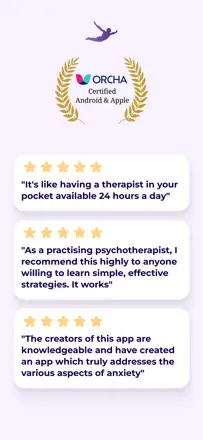
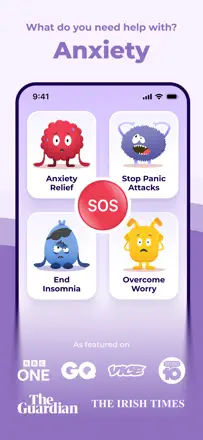
The app works on the Dare method: accepting and confronting panic instead of avoiding it. Users with panic disorder, agoraphobia, and severe anxiety describe measurable changes: returning to work, driving, and public spaces. Barry McDonagh's voice is perceived as therapeutically significant. This is not meditation in the classical sense. It is a cognitive restructuring tool for panic response.
Gelobt: The panic-acceptance method ('trigger it on purpose, amplify it') as an alternative to avoidance. The host's voice feels live, not generated. Helps in the moment of an acute attack.
Kritik: Exclusively focused on panic disorder and anxiety. Not suitable as a daily meditative practice for people without those conditions.
Für wen: People with panic attacks, GAD, and agoraphobia willing to work with a confrontation-based anxiety method.
Platz 11. Wert aus Rezensionen: 88 von 100. App-Store-Bewertung: 4,8★ · 4.841 Bewertungen
88von 100
Dr. Brewer's structured program on anxiety loops. Not just meditation but a reimagining of the mechanics of anxiety through mindful observation of triggers. After a few weeks users describe a shift where years of other attempts hadn't helped.
Gelobt: The approach of getting curious about anxiety rather than fighting it. Dr. Brewer explains the neuroscience of habit loops accessibly. The first tool that explains why you return to the breath rather than just asking you to.
Kritik: After four or five open days there's an abrupt stop without warning, which feels manipulative. The app is calibrated for a specific form of anxiety. Those needing tools for high-intensity panic attacks may find the toolkit insufficient.
Für wen: People with chronic background anxiety and a reflective bent, willing to go through a course sequentially rather than seeking quick relief.
Platz 9. Wert aus Rezensionen: 88 von 100. App-Store-Bewertung: 4,9★ · 9.090 Bewertungen
88von 100
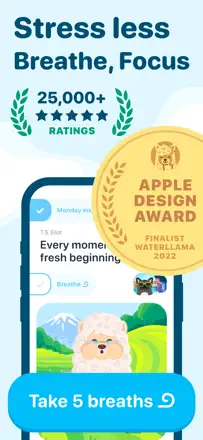
A compact app for breathing exercises, focus, and falling asleep with a playful visual language. Llama characters and animation make practice accessible for children and people who previously avoided meditation. The breathing timer with a pause between inhale and exhale is noted as technically sound.
Gelobt: An animated character breathing in sync with the user and haptic vibrations create a physical sense of rhythm. Home screen widgets and Apple Health integration make practice an unobtrusive habit.
Kritik: Content depth is limited: the app handles short resets well but doesn't offer extended meditation courses. Background sounds only work with the app open.
Für wen: Teens, people with work-related anxiety, and anyone who needs a quick calming tool rather than a developed meditation practice.
Platz 16. Wert aus Rezensionen: 83 von 100. App-Store-Bewertung: 4,8★ · 3.649 Bewertungen
83von 100
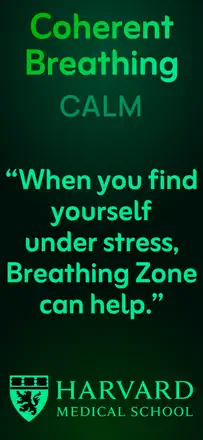
A clean breathing timer with no intrusive content. Gradually slows breathing rate to a target with synchronized visual and audio rhythm. Measurable results in users with physical conditions. Updates periodically break the audio functions.
Gelobt: The smooth slowdown from initial to target breathing pace without an abrupt start is cited as the main differentiator from competitors. Synchronized visual and audio rhythm helps maintain focus.
Kritik: Updates periodically break the audio functions, which is the app's primary tool. No way to customize the speed of reaching the target rate, which matters for users with physical limitations.
Für wen: Those who want to reduce breathing rate for stress or blood pressure relief without meditative content and voice guidance.