These apps are mentioned in the breakdown of this job. Open each one to compare strengths and limits. The order of the list is not a ranking of fitness.
Rank 3. Review score: 91 out of 100. App Store rating: 4.9★ · 42,437 ratings
91of 100
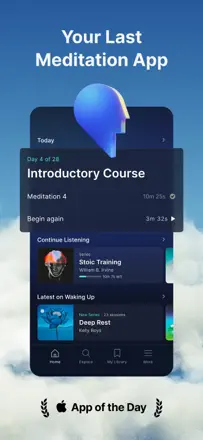
Sam Harris builds not just a meditation library but a clear secular system of practice: an intro course leads from concentration to non-dual awareness. Harris's voice is described as calm and precise. Includes conversations with Buddhist teachers, neuroscientists, and philosophers. People with decades of practice find new depth here.
Praised: Introduction to non-dual awareness through live speech, not instruction. Harris's voice and pacing. A library of conversations with real teachers, from Tibetan monks to scientists. Works for those who can't accept the mystical framing of other apps.
Complaints: Almost no female voices or teachers. One experienced user noted hours of practice without a single female voice. Navigation has grown more complex over time: in 2021 the app was focused, now it's cluttered with sections.
Best for: Practitioners with a secular worldview who care about methodological rigor. Suitable for both beginners and those with existing meditation experience.
Rank 5. Review score: 91 out of 100. App Store rating: 4.9★ · 8,610 ratings
91of 100
A science-based program from the University of Wisconsin built as a course with sequential lessons and practices. The guide Cortland's voice is noted in dozens of reviews as exceptionally calm. The program teaches meditation principles rather than simply streaming sessions.
Praised: A coherent structure: the lesson explains the principle, the practice grounds it in the body. Three-to-five minute micro-meditations fit into a busy day. The program genuinely shifts one's relationship with pain and anxiety rather than just providing temporary relief.
Complaints: Content updates infrequently after finishing the main course. There aren't enough pauses for independent practice within sessions. Some sections are overloaded with theory.
Best for: People who want to understand meditation from the inside rather than just relax. Especially useful for those who tried Headspace or Calm and didn't feel a lasting effect.
Rank 8. Review score: 88 out of 100. App Store rating: 4.8★ · 15,730 ratings
88of 100
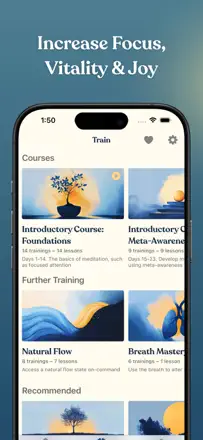
A structured program built as a learning course: modules increase in complexity, each technique is explained from a neuroscience perspective before practice. Liam, the app's sole voice, guides toward depth rather than relaxation.
Praised: The linear course structure gives a sense of progress. The scientific foundation is presented without snobbery. Flexible playlists let users build their own practice after completing the base modules. Works well for analytically minded people.
Complaints: Liam's voice is recorded too close to the microphone: lip and swallowing sounds are noticeable in silence, which distracts. Content updates are infrequent.
Best for: People who need not just relaxation but an understanding of how meditation works, and those who previously couldn't get into practice.
Rank 13. Review score: 86 out of 100. App Store rating: 4.8★ · 10,973 ratings
86of 100
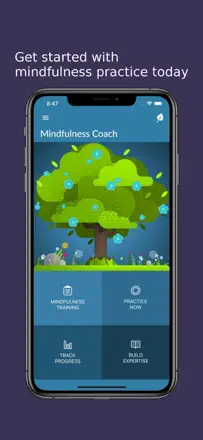
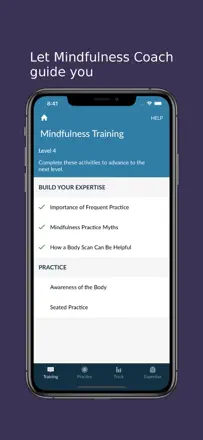
The best introductory mindfulness tool for those who need direct language without spiritual metaphors. A leveled course from basic breathing techniques to complex practices. Created for veterans with PTSD. Audio quality is uneven across recordings.
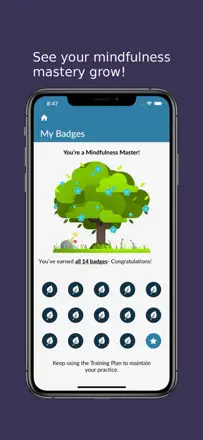
Praised: Full access without additional tiers or ads. Body scans and breathing exercises are called best-in-class. The growth tree structure provides visual progress without score-based gamification.
Complaints: Audio in some exercises is carelessly recorded with a flat voice. All meditations assume sitting in a chair. Content is educational in character with little in-depth practice.
Best for: A meditation beginner skeptical of commercial apps, or someone with anxiety and PTSD seeking an evidence-based approach without a spiritual overlay.