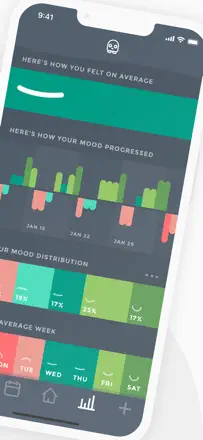
Compare entries about mood, sleep, activities and events and notice the coincidences worth discussing later, without automatically taking them for causes.
Diese Apps werden in der Analyse dieser Aufgabe genannt. Öffne jede, um Stärken und Grenzen zu vergleichen. Die Reihenfolge der Liste ist keine Rangliste der Eignung.
Platz 2. Wert aus Rezensionen: 74 von 100. App-Store-Bewertung: 4,8★ · 60.306 Bewertungen
74von 100
Daylio is the best icon-based mood tracker in its category: pick activity icons and a mood level, get clear analytics over months. The downside is that after an ownership change, promotional clutter appeared in the interface and some users lost voice recordings.
Gelobt: Fully customizable activity and mood icons plus retrospective charts let you spot life patterns you would never notice otherwise.
Kritik: Since the company was sold, the app has pushed intrusive promotional content, and some users permanently lost voice recordings with no way to recover them.
Für wen: Those who find writing difficult but want to see patterns in their mood and activities
Platz 26. Wert aus Rezensionen: 61 von 100. App-Store-Bewertung: 4,8★ · 69.702 Bewertungen
61von 100
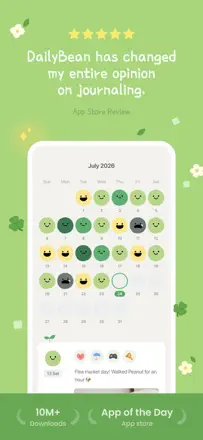
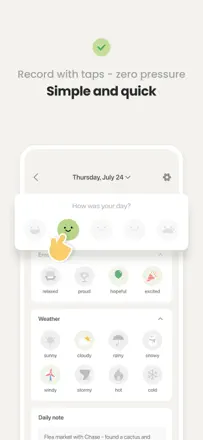
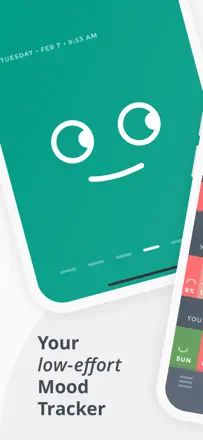
DailyBean is the most visually appealing minimalist mood tracker in this category: pick an emotion for the day, add a note, view analytics. The core works great, but an ad after every saved entry breaks the journaling rhythm.
Gelobt: Themed skins and the small animated bean make the daily mood check-in a genuinely pleasant ritual.
Kritik: An ad after every saved entry destroys the feeling of a smooth, quiet journaling experience.
Für wen: Those who want to log their mood simply and beautifully without many words
Platz 17. Wert aus Rezensionen: 64 von 100. App-Store-Bewertung: 4,7★ · 2.208 Bewertungen
64von 100
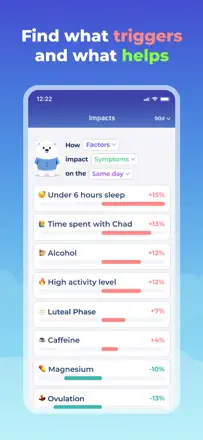
One of the few trackers that genuinely links mood to specific factors like sleep, physical activity, and thoughts, helping users see patterns rather than just logging data points.
Gelobt: Charts showing the connection between mood, sleep, and activity provide concrete feedback that is easy to discuss with a therapist.
Kritik: Periodic connectivity issues make the app unavailable for days at a time and break ongoing streaks.
Für wen: Those working with a therapist who want to systematically track how habits affect their emotional state
Platz 23. Wert aus Rezensionen: 62 von 100. App-Store-Bewertung: 4,8★ · 5.752 Bewertungen
62von 100
Bearable excels as a symptom tracker for people with chronic conditions: flexible setup, correlations between parameters, and genuinely useful at doctor appointments. The main weakness is an overwhelming interface, a high entry barrier, and new updates that periodically break things that worked before.
Gelobt: The ability to trace the link between food, sleep, and how you feel, then show the doctor a real picture over a month.
Kritik: Too many steps per entry: many users quit within a week from setup fatigue.
Für wen: People with chronic illnesses who keep a medical diary for their doctor
Platz 8. Wert aus Rezensionen: 72 von 100. App-Store-Bewertung: 4,8★ · 908 Bewertungen
72von 100
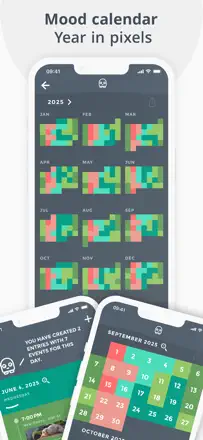
Moodistory keeps users coming back for years through its simple check-in, color mood scale, and the ability to attach photos to memories. The limitation is not the product itself but a fairly narrow emotion palette that does not capture nuanced states.
Gelobt: A color mood ribbon with photos turns the past year into a tangible emotional history.
Kritik: The available emotions are limited and do not cover complex states like anxiety or mixed feelings.
Für wen: Those who want a simple visual picture of their mood month by month