
Skip to content
Choosing by job

Find clear learning material for the language or writing system they need and for their own communication situation.

Language learning

Users of rare languages

What to check before choosing

Authors look for material for a specific language and for family or everyday communication. What matters is the right variety of the language and a clear start.

Which apps people use

These apps are mentioned in the breakdown of this job. Open each one to compare strengths and limits. The order of the list is not a ranking of fitness.

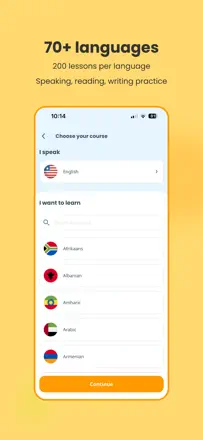
  1. Ling – Learn Languages Easily

    Rank 49. Review score: 53 out of 100. App Store rating: 4.6★ · 13,845 ratings

    The widest coverage of rare languages among the apps tested: Tagalog, Thai, Khmer, Mongolian, and dozens more. The basic lesson structure of phrase, translation, native-speaker audio, and writing practice works. Main weakness: beginners are dropped into sentences without an explanation of the alphabet, and the speaking practice feature is not available for all languages.

    Praised: Learners of rare languages have no comparable alternative in terms of breadth. Audio from claimed native speakers sets the app apart from many competitors. Tagalog users complete full courses and praise the structure.

    Complaints: Beginners are thrown into sentences without an introduction to basic characters, which is especially acute for Thai, Khmer, and Tamil. Speaking practice does not work for all languages. Translations in some languages contain errors. Abrupt jump to complex structures without gradual buildup.

    Best for: Learners of rare languages (Tagalog, Thai, Khmer, Swahili) for whom Ling is the only structured mobile option. For widely spoken languages better alternatives exist.

  2. Drops: Language Learning Games

    Rank 68. Review score: 40 out of 100. App Store rating: 4.7★ · 71,261 ratings

    The best mobile tool for memorizing vocabulary through pictures, not for speech. Fast visual association sessions lock words in well. No grammar at all, no speaking practice, and not enough depth to reach free conversation.

    Praised: Visual word association without translation to the native language. Fast five-minute sessions. Rare languages (Tagalog, Icelandic, Ukrainian). A simple uncluttered interface.

    Complaints: Teaches only word recognition, not language use. No grammar or listening practice in a communicative context. After weeks of use you know words but cannot build sentences.

    Best for: Beginners who want a fast visual vocabulary starter before moving to a course with grammar and speaking.

  3. Innovative Language Learning

    Rank 39. Review score: 60 out of 100. App Store rating: 4.7★ · 34,085 ratings

    Audio podcasts for language learning in a format where two native speakers converse and a third explains the structure. The method works for listening comprehension and picking up natural speech. Several users report a real breakthrough in Japanese, Russian, and Romanian. The mobile app is significantly thinner than the web version: no flashcards, no offline, and audio sometimes cuts out.

    Praised: Lessons built around real dialogues with cultural context rather than textbook phrases. Supports rare languages such as Romanian, Afrikaans, and Norwegian where almost no other resources exist.

    Complaints: Audio only, no active speaking practice, and no pronunciation feedback. The immersion-through-listening method requires additional tools to reach speaking fluency.

    Best for: Those who learn while commuting or walking and want to hear natural native speech with structural explanations, like an advanced audio textbook.

  4. Cake - Learn English & Korean

    Rank 15. Review score: 72 out of 100. App Store rating: 4.9★ · 15,477 ratings

    A video-driven course in Korean and English built around scenes from real films and clips. The strongest feature is authentic speech: words are learned in living context, you can slow the video, and there is a repeat-after-me mode. Works especially well for users drawn in by K-pop and dramas.

    Praised: Users note that Hangul sticks quickly thanks to structured lessons. The video format with pause and repeat gives a feel for the intonation and pace of natural speech. Content featuring BTS and other groups keeps motivation high.

    Complaints: Most content is behind the Cake Plus paywall. Phonetic transcription (Latin alphabet) is not always provided, which hampers pronunciation in the early stages. Deep grammar is sparse: the app builds vocabulary and listening comprehension but does not explain language structure.

    Best for: Beginners, especially fans of K-pop and Korean culture, who want to understand spoken language and say basic phrases rather than study grammar academically.

Other jobs in this topic

Full ranking: Language learning95 apps with screenshots and scoresWhere this breakdown comes fromRead the research and the observations from reviews