After a break, skills come back unevenly. What matters is starting from a suitable exercise and being able to skip what is known without hiding the gaps in other skills.
Which apps people use
These apps are mentioned in the breakdown of this job. Open each one to compare strengths and limits. The order of the list is not a ranking of fitness.
Rank 58. Review score: 46 out of 100. App Store rating: 4.8★ · 215,322 ratings
46of 100
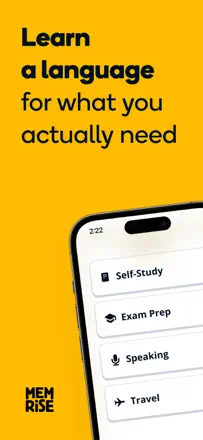
The app's unique strength is native-speaker video clips that lodge words in memory better than text. Community-made courses have been removed and the structure has broken down. The AI conversation partner exists but generates incorrect sentences.
Praised: Video fragments from real native speakers for word memorization. A wide language selection including rare ones. AI dialogues for live speech practice. A clean and fast interface.
Complaints: Community courses that made Memrise distinctive have been removed. The AI generates grammatically incorrect sentences. Progress can reset unexpectedly. The paywall blocks most content.
Best for: Intermediate learners who want video-based vocabulary building and have already established a grammar foundation elsewhere.
Rank 6. Review score: 78 out of 100. App Store rating: 4.7★ · 27,768 ratings
78of 100
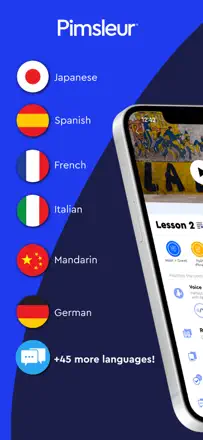
An audio course that teaches speaking and listening comprehension through active recall from the very first lesson. Spaced repetition is built into the audio: the app asks you to reproduce a phrase at increasing intervals. Users with five languages under their belt call Pimsleur the best method for reaching conversational fluency. Grammar is not explained explicitly but absorbed through context.
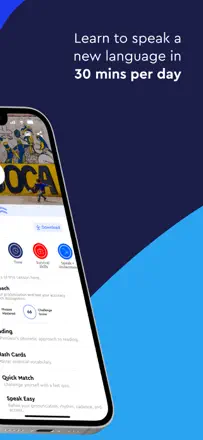
Praised: You can learn hands-free with no screen: lessons run 30 minutes and only require earphones. Several users report having real conversations with native speakers after finishing the first level, a concrete result rather than just a feeling of progress.
Complaints: No written component and no grammar explanations. For learners who study through reading and systematic analysis the method works poorly. Difficulty cannot be adjusted: the app starts from zero regardless of your existing knowledge.
Best for: Those who want to speak and understand spoken language, learn on the go, and are comfortable with an audio-only format without visual support.
Rank 7. Review score: 78 out of 100. App Store rating: 4.8★ · 9,802 ratings
78of 100
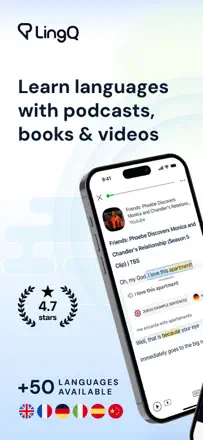
One of the few tools that genuinely builds listening comprehension and reading ability through immersion in real content. Users choose their own materials, words are tracked automatically, and progress is visible. Weak spots: clunky interface and inaccurate translations for some languages (Japanese).
Praised: You can read and listen to any content in your target language, click unfamiliar words, and see a contextual translation. One user reached conversational Ukrainian in two years.
Complaints: No grammar explanations and no pronunciation feedback. The interface is cluttered. Not a good fit for absolute beginners: a foundation is required.
Best for: Those who already know a few hundred words and want to reach a level of understanding authentic speech through reading and listening.