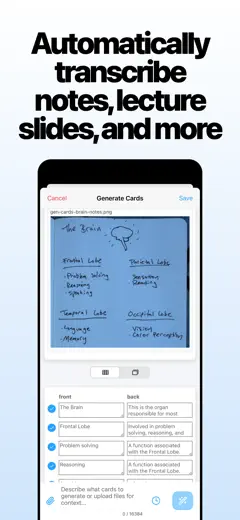
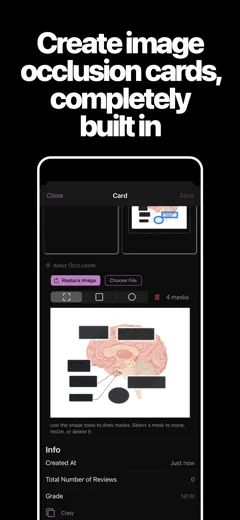
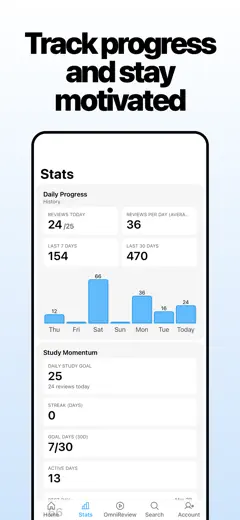
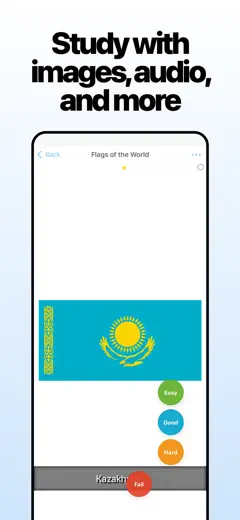
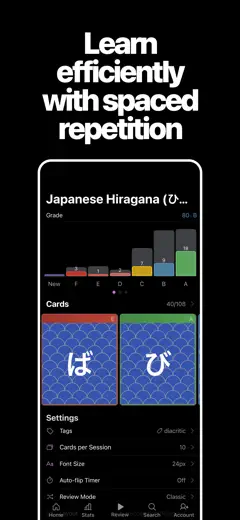
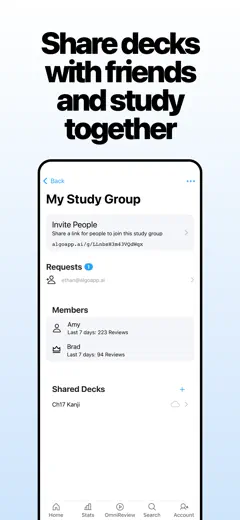
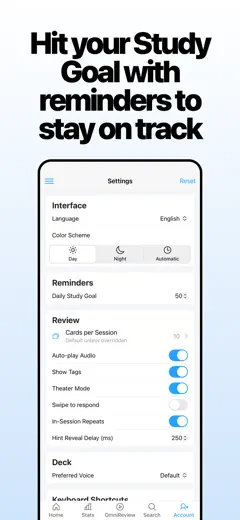
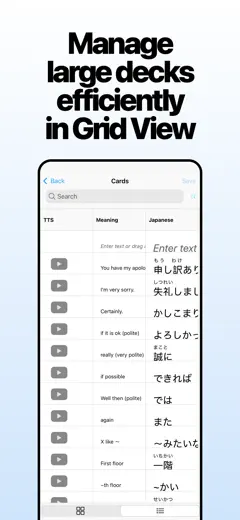
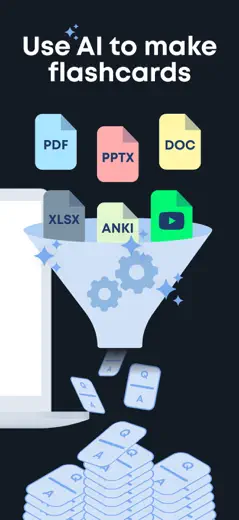
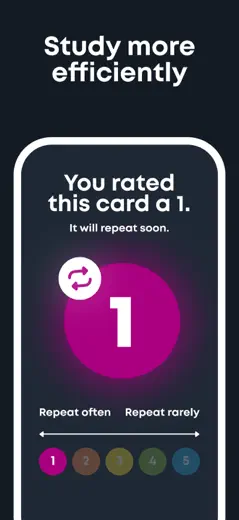
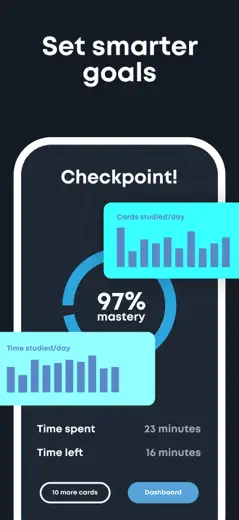
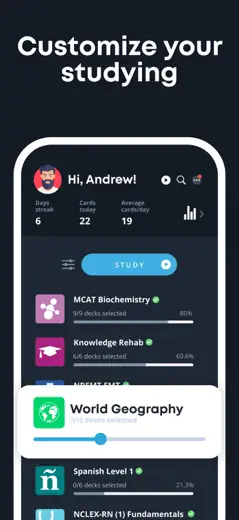
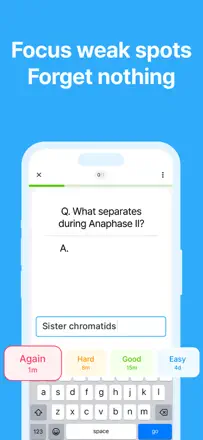
AlgoApp (formerly Flashcard Hero) is one of the best pure SRS tools on iOS. It supports FSRS one of the most accurate spaced-repetition algorithms available along with AI card generation and cross-platform sync. The technical issues are real, but longtime users give it high marks for good reason.
評価点
The FSRS algorithm adapts the review schedule to your actual responses more precisely than Anki's classic SM-2. An AI assistant generates cards right inside the app. There's a huge library of pre-made decks to download.
不満点
Sync between devices is unreliable. CSV import doesn't auto-convert phonetic transcriptions. Cards inside downloaded community decks can't be edited.
向いている人:Serious language learners and exam preppers who want a top-tier repetition algorithm and the ability to build their own material.
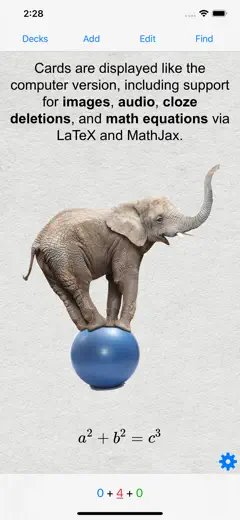
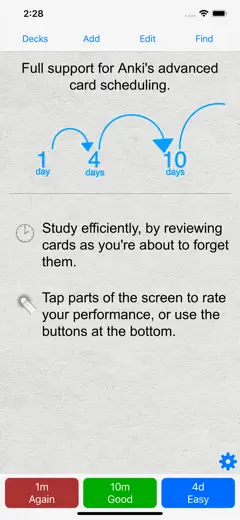
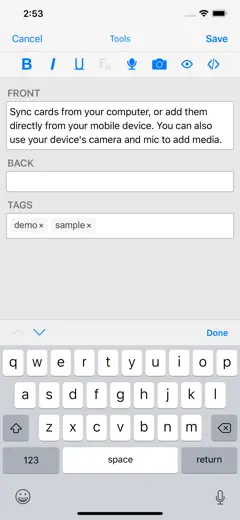
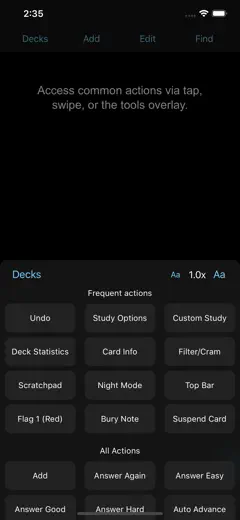
AnkiMobile Flashcards is the mobile port of the legendary Anki SRS engine. The spaced-repetition algorithm is the best in the category: configurable retention, FSRS, proven over decades. It supports media cards, import/export via AnkiWeb, and thousands of community decks. The one significant weakness is the interface it feels archaic, doesn't follow iOS conventions, and has a steep learning curve. Complex card editing is desktop-only. One-time purchase of $25.
評価点
FSRS with configurable retention delivers a science-backed review schedule. Sync through AnkiWeb. Thousands of community decks for languages, medicine, law, and more.
不満点
The interface doesn't follow iOS patterns and still feels like a web wrapper. Complex card editing is only available on desktop. There's no obvious button to study an entire deck.
向いている人:Med students, linguists, law students, and anyone serious about long-term retention who is willing to spend an hour on setup to get the best algorithm available.
Brainscape is one of the few apps in this batch that genuinely implements spaced repetition with user-rated confidence. The method works, and the interface is cleaner than most competitors. The main limitations are around session control and text-to-speech.
評価点
A five-point confidence scale on every card directly drives review frequency this is honest SRS. Cross-platform: easy to create decks in the browser, easy to study on your phone.
不満点
You can't set a fixed number of cards per session. No text-to-speech. The algorithm sometimes resurfaces cards you just reviewed while ignoring ones you haven't answered.
向いている人:Students and self-learners with ready-made card sets or who want to build their own. Especially good for people who study on both phone and computer.
Picmonic is a mnemonic learning tool for medical students short video stories with characters that encode medical facts. Not flashcards in the classic sense, but closer to them than a dictionary. The content for medicine (NCLEX, pharmacology, pathophysiology) is specialized and deep.
評価点:Narrative approach: each disease or drug is a short story with memorable characters. Users report the information sticks far better than reading from a textbook.
不満点:Some practice questions contain factual errors (e.g., confusing 'associated with' and 'treated by'). Navigating the catalog for NP programs is confusing.
向いている人:Nursing and medical students preparing for NCLEX or Step exams. Not applicable to other disciplines.
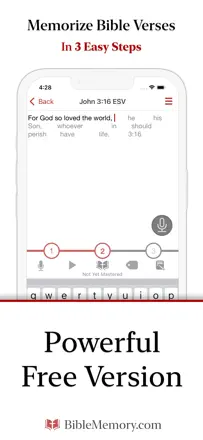
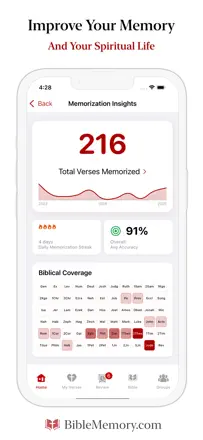
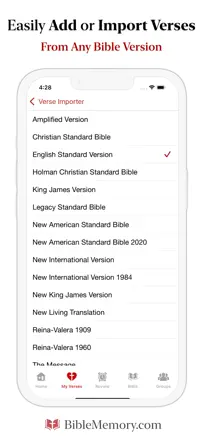
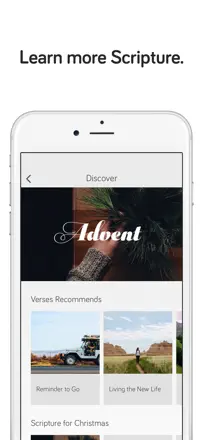
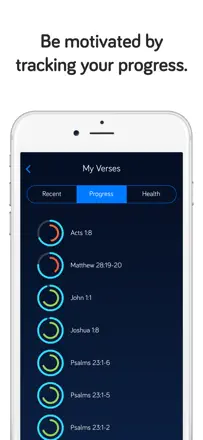
The Bible Memory App is a specialized tool for memorizing scripture through progressive revelation from seeing the full text to typing it from a blank field. Not classic flashcards, but spaced repetition is present. The audience is very loyal, and the product handles its narrow job well.
評価点:Three input modes full text, partial, and blank build real progress from guided recall to free reproduction. Verse organization by folders and lists is flexible.
不満点:Voice recognition is unstable, especially with archaic KJV text. Apple Watch sync is broken. A number-entry bug prevents users from reaching 100%.
向いている人:Believers who want to memorize Bible verses by heart. Too narrow to work as a general-purpose flashcard app.
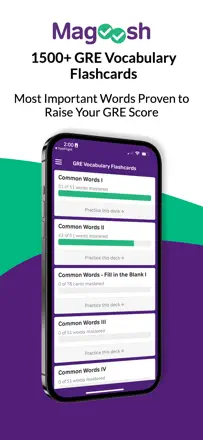
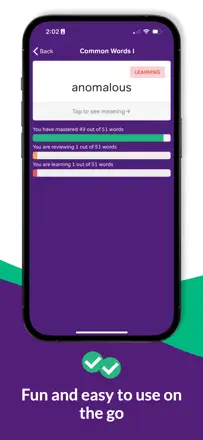
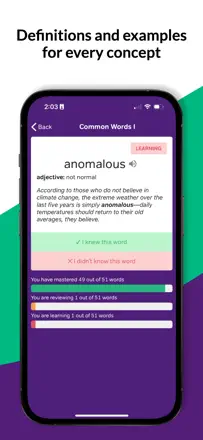
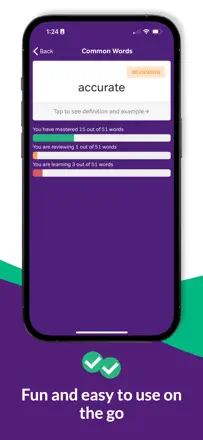
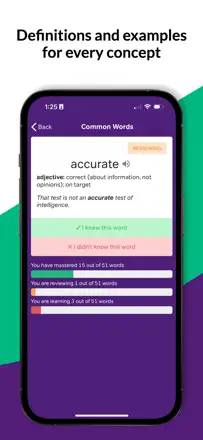
A free GRE vocabulary deck from Magoosh with curated word lists. A review algorithm exists but has real flaws: it introduces new words before older ones are solidified, occasionally resets progress, and doesn't let you manually move a word from 'Mastered' back to 'Learning'. Content quality is solid good vocab coverage and mostly good example sentences, with some weak ones.
評価点:Completely free with no ads, solid GRE word selection, clean and simple interface, and useful for non-GRE learners wanting to expand their vocabulary.
不満点:The algorithm adds new words before current ones are locked in, progress resets periodically, word statuses can't be edited, there's no full card list view, and Magoosh blog notifications are annoying.
向いている人:GRE preppers who need a free, ad-free academic vocabulary trainer. Good for passive review, weak for actively managing progress.
Quizlet is a solid flashcard tool with good study mechanics. Creating sets is fast, and the library of other users' content is enormous. But spaced repetition is heavily cut in the free tier, the test mode has a monthly attempt limit, and grading for open-ended answers sometimes marks wrong answers as correct.
評価点:A massive library of ready-made sets from other users. Multiple study formats match, test, learn switchable in one tap.
不満点:The adaptive algorithm for weak cards only works in the paid version. Written answer grading is imprecise it accepts questionable answers and rejects correct ones.
向いている人:Students who need to quickly cram someone else's set before an exam. Long-term retention requires a paid subscription.
One of the more feature-rich tools in this batch: Apple Watch support, a drawing mode, games, and multiple study formats. The SRS algorithm is aggressive it piles up hundreds of due cards and stresses users. Development has stalled: voice control has been in beta for over a year, and iOS 26 broke the formatting editor. Most features require a subscription.
評価点:Apple Watch for quick pocket sessions, a drawing mode for handwritten input, multiple study formats beyond basic card flipping, and multi-language text-to-speech.
不満点:The SRS algorithm stacks too many cards into the due queue with no way to reduce the load. Development is stagnating. iOS 26 broke rich text formatting in cards.
向いている人:Students and educators who need varied study formats and are willing to pay for a subscription.
A question bank for medical exam prep (USMLE, NCLEX, LPN). Explanation quality and question volume are high, with flashcards available as a supplement to the Q-bank. The mobile app is unreliable: systematic authentication problems (Face ID, session dropouts), crashes on iPad, and progress loss on connection drops. The web version is more stable.
評価点:Detailed explanations for every question that walk through clinical reasoning not just the right answer.
不満点:The mobile app doesn't work offline, which is critical for clinicians studying between shifts.
向いている人:Medical and nursing students preparing for USMLE or NCLEX who study primarily on a computer.
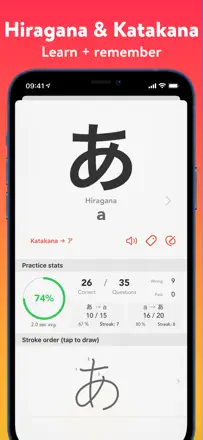
A narrow-purpose app for learning the Japanese syllabaries (hiragana and katakana). Not a general-purpose flashcard engine. Spaced repetition is advertised in the 'smart quiz' mode, but it's critically broken: the quiz ignores katakana and only shows hiragana, even on high streaks, instead of surfacing weak characters. Handwriting recognition is unreliable for katakana.
評価点:Minimal and free, works well for hiragana, clean interface without clutter, per-character progress tracking.
不満点:Smart quiz is broken for katakana the core feature doesn't work. Handwriting recognition is unreliable. No onboarding for new users. Saving custom character lists is buggy.
向いている人:Japanese beginners who only need to learn hiragana. For katakana, the app is effectively unusable based on current reviews.
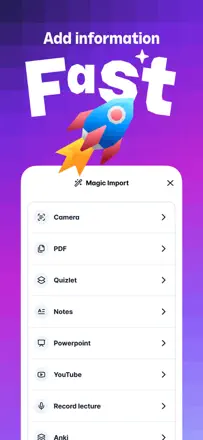
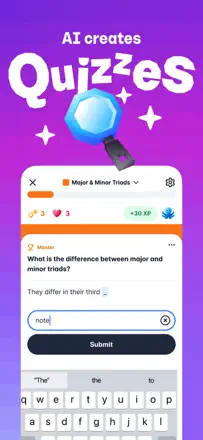
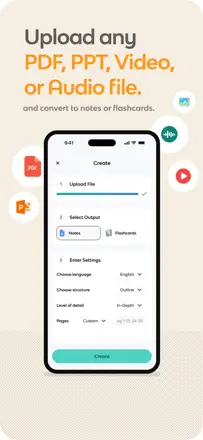
An AI tutor that generates flashcards from uploaded material photos of notes, PDFs, links. The auto-generation mechanic works, but the AI often produces low-quality cards (inconsistent quantity, irrelevant questions). The 'hearts' system artificially caps study time. The app hangs after a completed quiz, wiping progress.
評価点:Upload a photo of your notes and get a ready deck. There's an explanation mode after wrong answers, support for learning materials via link, and integration with an AI tutor.
不満点:The AI splits material into cards unevenly. The hearts system cuts off your session mid-study. Post-quiz hangs destroy progress. Onboarding asks for excessive personal data and contact access.
向いている人:Students who want to quickly turn lecture notes into cards for exam prep without building decks manually.
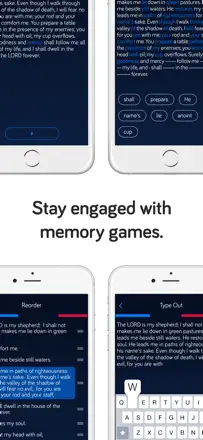
Verses Bible Memory uses game mechanics (Type-Out, Speak Out, progress bars) to help memorize scripture. The repetition mechanics genuinely work multiple reviews describe going from 11 verses over a summer to 5 verses a day. But the product is clearly abandoned: last update was 5+ years ago, support takes months to respond, and purchase restoration after switching devices is broken. Speak Out glitches on long passages. Niche content (Bible, catechism) with no user-created material.
評価点:Step-by-step text revelation through games breaks memorization into manageable chunks. Progress bars give visible control over your material.
不満点:Purchase restoration after a device change is broken. Speak Out glitches on reopening and fails on long passages. No user content only built-in Bible translations.
向いている人:Protestants and Catholics who regularly memorize scripture and can tolerate an outdated interface for a working algorithm.
A vocabulary trainer built around film and TV clips with contextual examples not a classic SRS flashcard editor. Content is fixed (the app's own word database), so you can't create your own cards. It took a serious hit from several updates that wiped user progress and broke audio. AI-generated illustrations are frequently criticized for poor quality.
評価点:Vocabulary cards tied to real clips from movies and TV shows words stick because you remember the context. Deep enough content for advanced learners.
不満点:No way to add your own words or create custom cards. Multiple updates have wiped accumulated progress. AI images are off-topic. Audio breaks after updates. Development stagnating compared to competitors.
向いている人:English learners at B1-C1 who want to expand vocabulary through film context rather than building their own decks.
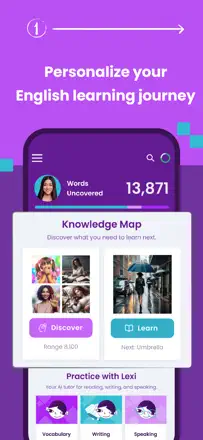
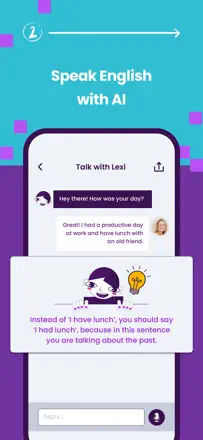
An adaptive vocabulary trainer with smart definitions and contextual examples from real texts. The concept is strong: the algorithm tracks which words are 'slippery' and brings them back. But the app is technically neglected constant sign-outs, progress loss, and no way to create a custom word list. The web version works better than mobile.
評価点:The algorithm delivers words through context and smart definitions, building understanding rather than just rote memorization.
不満点:You can't build your own word list only pre-set collections are available.
向いている人:People who want to deepen their English vocabulary through context and can put up with an unstable mobile experience.
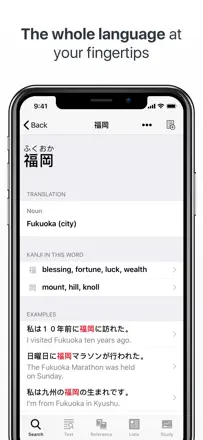
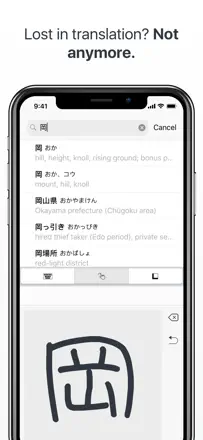
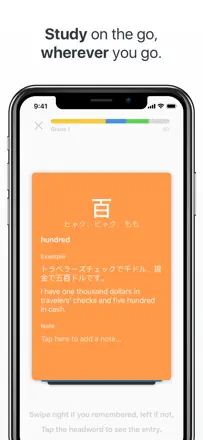
Japanese (the Kawa dictionary app) is a Japanese dictionary with built-in flashcards and a basic SRS system. The cards exist but are secondary the main use case is word and kanji lookup. Card settings are limited (you can't choose what to show). The pronunciation feature has been broken for many users for several years, which is critical for language learning. Handwriting kanji input underperforms competitors. No sync between devices.
評価点:Large database with example sentences, JLPT-level sorting, and SKIP-method kanji lookup. You can create your own lists and study them as cards.
不満点:Pronunciation has been broken or unstable for years. No sync between iPhone and iPad. Card content isn't flexibly customizable.
向いている人:Intermediate to advanced Japanese learners who need word and kanji lookup more than systematic SRS study from scratch.
A vocabulary trainer with fixed content (the app's own word sets). It doesn't let you skip words you already know and forces you through material in a strict order. No custom card creation. After the trial, most features are locked. An ad-watch unlock option deceives users it shows the ad but unlocks nothing.
評価点:Focused delivery of one word at a time with exercises and review. Clean, pleasant design. A free tier with ads exists.
不満点:Can't skip known words or add your own. Rigid linear progression. Bait-and-switch with ad-based unlocks. Excessive repetition of familiar words frustrates experienced learners.
向いている人:English beginners who want a structured vocabulary course from the app and don't plan to go beyond the built-in word sets.
An Anki clone with spaced repetition and a decent interface that became highly unstable after a rename from 'Anki'. Widespread complaints about card loss on logout, unavailability without internet, and a long unskippable ad inserted after every deck added without warning. The SR mechanic works, but reliability and honesty of policy have degraded.
評価点:Spaced repetition is implemented. Offline mode exists (limited). AI deck generation from text. Simple card creation with image support.
不満点:Data is lost on logout. Forced ads after every deck without notice. Support is unresponsive. Server dependency means the app is completely inaccessible when their server goes down.
向いている人:Students who need a free Anki clone for one-off exam prep and can tolerate ads and instability.
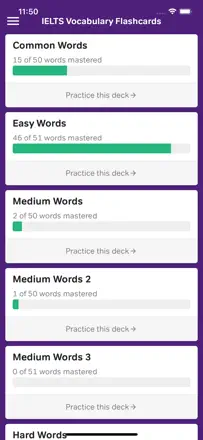
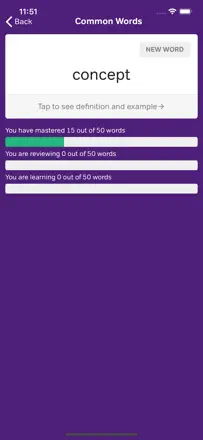
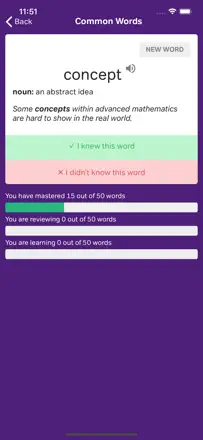
Flashcards with a fixed IELTS vocabulary set of roughly 600 words. Cards are organized by topic area with translations into other languages. The main limitation is that you can't add your own words or shuffle all categories at once. Useful as a supplement to IELTS prep but doesn't cover the full vocabulary range needed.
評価点:Cards are organized by IELTS topic blocks, allowing targeted work on weak areas.
不満点:The word base is closed and small you can't add words from your own sources or from real IELTS passages.
向いている人:IELTS preppers who want a compact core vocabulary reference on their phone as part of a broader study plan.
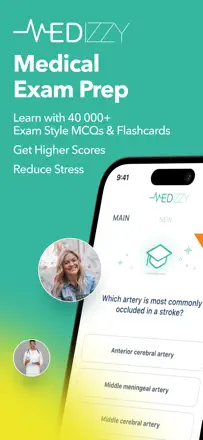
MEDizzy Medical Exam Prep is a social platform with medical MCQ questions, flashcards, and clinical cases. Flashcards are included but there's no SRS. The main strength is a large bank of clinical questions with visual cases. The weakness is that typos and grammar errors in the questions undermine trust in medical content. No explanations are given for why the correct answer is correct. Restoring a lifetime subscription without the original Apple ID is impossible.
評価点:Clinical cases with visual aids. Broad specialty coverage. The feed-style format makes it easy to scroll through.
不満点:No explanations for correct answers. Typos and errors in medical terminology. App crashes when switching to the background. No volume control during a session.
向いている人:Medical students and paramedics preparing for USMLE, NREMT, and similar exams through question practice.
An AI generator that creates study materials from user-uploaded sources (photos, PDFs, notes) with auto-generated flashcards, tests, and summaries. The AI cards are created, but quality is inconsistent. The app has quietly moved features behind a paywall that were previously free. Support is unreachable. Subscription terms are unclear with potentially hidden charges.
評価点:Scan handwritten notes and convert them to cards. Generate test questions from uploaded material. AI assistant explains topics.
不満点:Paywall appears without warning mid-study on features that were previously free. Progress doesn't transfer on upgrade. AI chat answers cut off mid-response. Support doesn't respond. Test answer options are weak (other questions used as distractors).
向いている人:High school and college students who want to quickly turn notes into study materials before exams. Not suitable for long-term use due to unstable monetization policy.
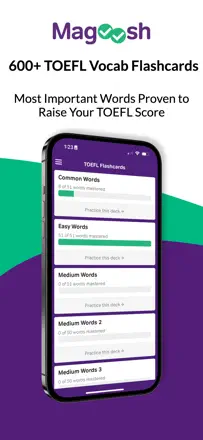
TOEFL Flashcards from Magoosh. Cards are split by difficulty level with audio and example sentences. The product is functional but narrowly focused: vocabulary only, no practice for other TOEFL sections. Progress occasionally resets. Cards are fixed no way to add your own.
評価点:Difficulty-level splits let you start at the right level and move forward without wading through things you already know.
不満点:The word set is fixed you can't add words from real TOEFL passages or create personal sets.
向いている人:TOEFL preppers who want a structured vocabulary trainer as part of their preparation, not a full course.
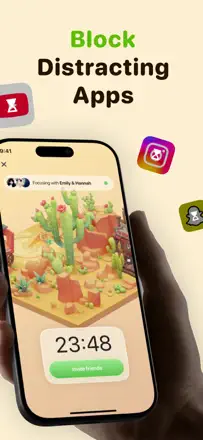
A focus timer with gamification (a garden tile system) and a basic flashcard module. Cards are secondary, not core: there's no spaced repetition, and cards work alongside Pomodoro sessions. The app is genuinely useful as a study motivation tool, but it's not competitive as a dedicated flashcard app.
評価点:The garden tile gamification builds a study habit users come back for progress in the garden, not just for the studying itself.
不満点:Flashcards are superficially integrated: no spaced-repetition algorithm, no analytics on which cards are weakest.
向いている人:School and college students who need a motivator for long study sessions, not a rigorous memory trainer.
Vocabulary is an app for passive word absorption through a scroll feed and notifications not real flashcards. Closer to a 'word of the day' app than SRS. Errors in pronunciations and definitions undermine trust in the content.
評価点:A TikTok-style word scroll lowers the barrier to engagement. A home screen widget acts as a constant reminder without opening the app.
不満点:Content has factual errors in definitions and pronunciations. No user-created cards. No real repetition algorithm based on weak spots.
向いている人:Someone who wants to passively expand their vocabulary without much effort. Not suitable for deliberate memorization.
A mobile version of the '504 Essential Words' textbook in flashcard format. Cards include words, example sentences, and TTS pronunciation. The problem is that TTS is unreliable a critical flaw for a language learning app. An update also locked the second half of the book behind a subscription without notifying existing users.
評価点:Cards follow the structure of the well-known textbook exactly, which is convenient for anyone already working through the book.
不満点:TTS pronunciation is unstable or plays too fast for beginners, undermining the card's core function.
向いている人:People working through the 504 Essential Words textbook who want the same material in a digital format.
The app has degraded significantly: it introduced a hard 15-card limit for free users, making it unworkable for any real study workflow. The repetition algorithm is weaker than Anki's, export is locked behind a proprietary format, and CSV import is broken. The only real advantages are Apple Watch support and a simple interface.
評価点:Apple Watch support for quick glanceable reviews without the phone. Simple deck creation for non-demanding use cases.
不満点:A 15-card free limit kills the core value. The spaced-repetition algorithm is more primitive than competitors. CSV import is unreliable. Export is blocked your data is locked in.
向いている人:Casual users with a couple dozen cards who are willing to pay for a subscription.
AI card generation from uploaded material works, but the repetition algorithm is broken: the app shows the answer immediately alongside the question, destroying the active recall mechanic. Users directly compare it to Anki unfavorably. The server is unstable and file processing frequently hangs.
評価点:Auto-generating questions from PDFs and notes via AI speeds up deck creation. Quizzes are handy for a quick check before a test.
不満点:Shows the answer right with the question active recall doesn't work. No difficulty customization. The server is frequently down when uploading files. AI misses key points from the source material.
向いている人:Students in Arabic-speaking countries who need a quick pre-exam review but not deep memorization.
A passive English vocabulary trainer. Mini-games help with initial exposure, but the algorithm doesn't let you control the pace words get marked as 'learned' faster than they actually solidify. You can't add your own words, TTS mispronounces some words, and definitions are occasionally inaccurate. Real vocabulary-building benefit is limited.
評価点:Mini-games (crossword, matching) break up the monotony of repetition and keep short sessions engaging.
不満点:The repetition algorithm doesn't adapt to the user: words move to 'learned' status without enough reinforcement, and there's no way to manually bring them back.
向いている人:People who want a quick introduction to new English words through a game format and aren't looking for deep retention.
A bare-bones card maker with no spaced-repetition algorithm. Users note that deck shuffling is paywalled, flipping cards requires payment, and data gets lost. Ads include a scammy scare-screen ('your account has been hacked'). Basic card creation works, but everything else is cut behind a subscription.
評価点:Minimal editor create a deck, start studying, no ecosystem lock-in, suitable for users who want just flashcards and nothing else.
不満点:No spaced-repetition algorithm. Shuffling and card reversal are paid features. Aggressive promotional interruptions. The ad network serves scammy content. Sync is unreliable.
向いている人:Users who want bare-bones digital flashcards without an SRS algorithm and can tolerate the free plan's restrictions.
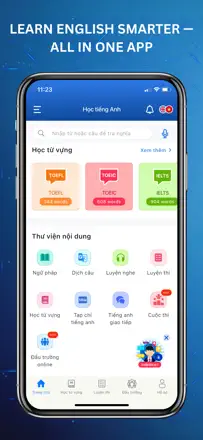
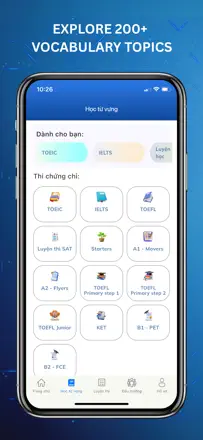
Not relevant to this niche: this is not SRS and not flashcards. It's a pre-built TOEIC vocabulary course for a Vietnamese-speaking audience with fixed content. No card creation, no user import, no real spaced repetition. Multiple content errors (incorrect word translations).
評価点:Structured vocabulary course with thematic sets for TOEIC prep. Low price for additional modules.
不満点:Fixed content with no way to add your own words. Translation errors (shoe, football). No real SRS. Lifetime purchases don't survive reinstallation.
向いている人:Vietnamese students preparing for the TOEIC exam.
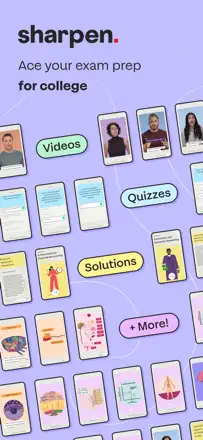
Sharpen College Exam Prep is a companion to McGraw Hill textbooks with quizzes and study modules. Flashcards exist but aren't the main mode, and on iPhone they don't work at all for some users. The app is technically unstable: videos freeze, progress doesn't save, email login breaks, it crashes when switching tasks. AI features are locked for free users but sit prominently on the home screen.
評価点:Content is tied to specific textbook chapters questions match exactly what's on the exam. Material is broken into small blocks.
不満点:Flashcards don't work on iPhone. Videos freeze mid-way. Progress is lost on logout. Constant sign-outs. Buggy UI hides some options behind clipped windows.
向いている人:College students whose course required buying McGraw Hill Connect, where the app comes bundled.
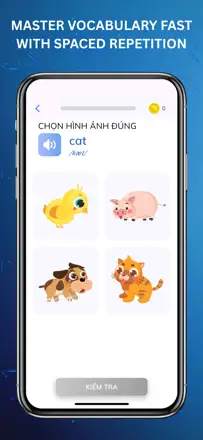
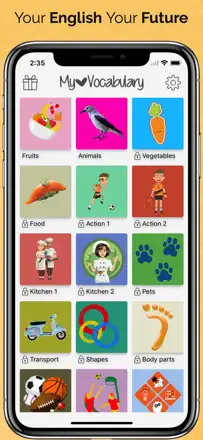
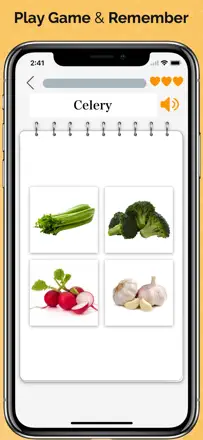
Not relevant to this niche: not a flashcard app and not SRS. It's a picture-based vocabulary trainer for learning themed word sets (fruits, animals, etc.). No custom card creation, no spaced repetition, no import. One review explicitly mentions broken audio.
評価点:Visual pictures help children memorize words. Simple multiple-choice format.
不満点:No SRS and no custom card creation. Audio periodically stops working. With 4+ images shown, the top ones get cut off. Pronunciation sounds non-standard to native speakers.
向いている人:Children and absolute beginners learning basic vocabulary through pictures.
An app with critical reliability problems: data disappears when you create an account after working as a guest, cards vanish on crashes, and sync between devices doesn't work. The desktop version is stripped down (can't add cards). Multiple users have lost hours of work. Functionally weaker than competitors.
評価点:Folder support for organizing decks. Ability to add images to cards. Basic functionality works offline.
不満点:Cards are lost when creating an account after starting without logging in. No reliable cross-device sync. Desktop doesn't allow card creation. No control over which side shows first when studying languages.
向いている人:Students who need a simple free tool and are okay with potentially losing their data.