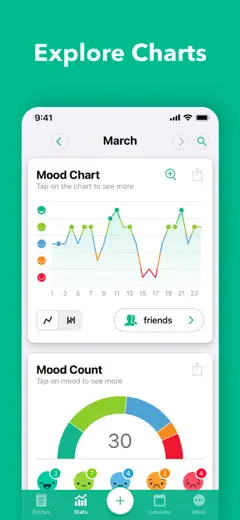
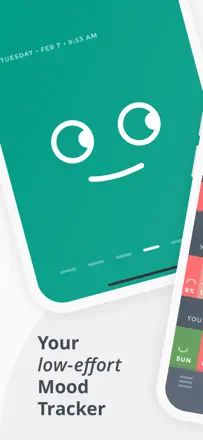
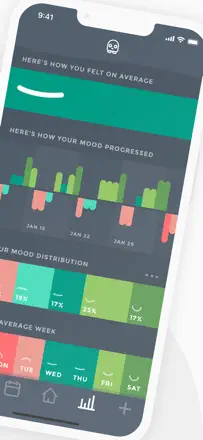
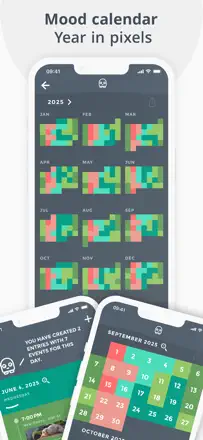
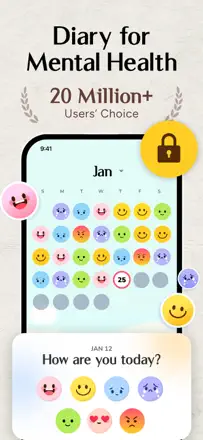
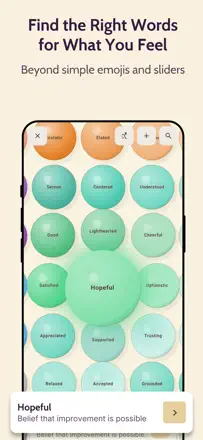
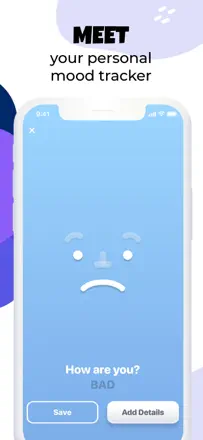
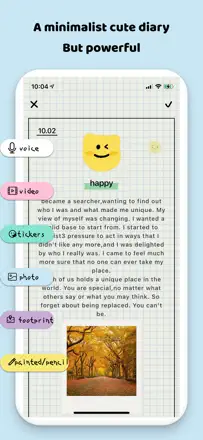
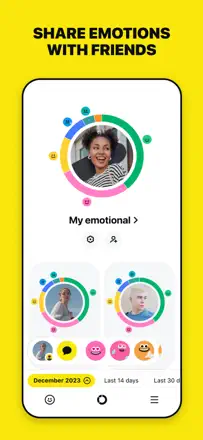
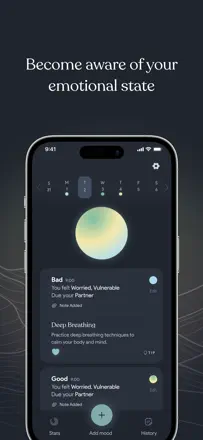
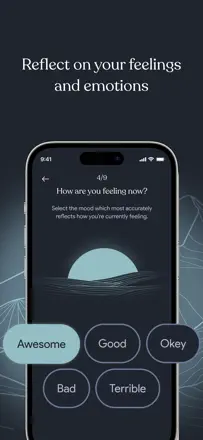
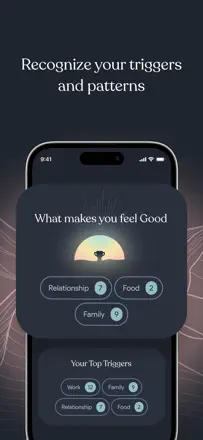
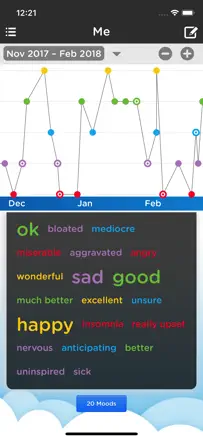
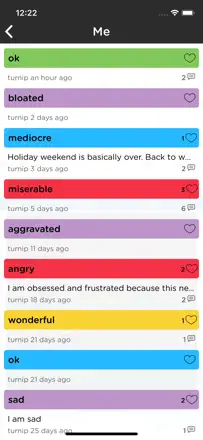
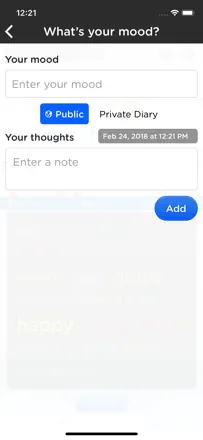
A rich emotion vocabulary with a two-axis scale genuinely helps people name what they are feeling. The free, no-subscription model sets it apart, and therapists actively recommend it to their clients.
評価点
A detailed emotion map split by energy and valence lets you describe your state with real precision.
不満点
The friend-sharing and sync features are unreliable, and that is the app's core social function.
向いている人:Those who want to understand their emotions better without paying a subscription
Daylio is the best icon-based mood tracker in its category: pick activity icons and a mood level, get clear analytics over months. The downside is that after an ownership change, promotional clutter appeared in the interface and some users lost voice recordings.
評価点
Fully customizable activity and mood icons plus retrospective charts let you spot life patterns you would never notice otherwise.
不満点
Since the company was sold, the app has pushed intrusive promotional content, and some users permanently lost voice recordings with no way to recover them.
向いている人:Those who find writing difficult but want to see patterns in their mood and activities
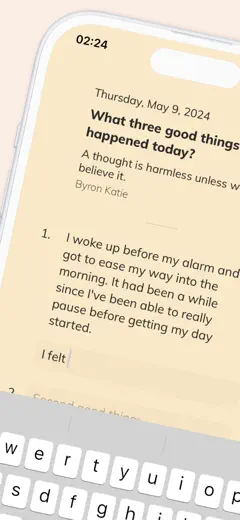
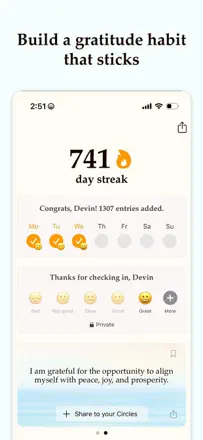
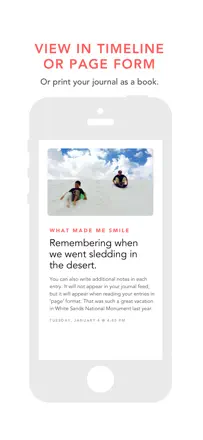
A lean gratitude journal with a well-calibrated structure: three items a day, a daily quote, and a PDF summary for any period. Reminders occasionally fail and the PDF export is sometimes incomplete.
評価点
The three-point format is small enough to do every evening and specific enough to actually work.
不満点
No streak counter and no way to jump back to a past entry without scrolling through a long list.
向いている人:Those who want to build positive thinking habits without much effort
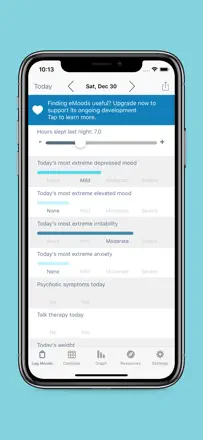
eMoods is built specifically for people with bipolar disorder: it tracks episodes, medications, sleep, and mood in a single daily report that is easy to show a psychiatrist. The interface is neutral and does not overwhelm on bad days. The weak points are unreliable cross-device sync and an export that requires technical know-how.
評価点:A specialized psychiatrist report that shows weeks and months at a glance.
不満点:Only four severity levels (none, mild, moderate, severe) which is not enough to describe the full range of states accurately.
向いている人:People with bipolar disorder who work with a psychiatrist
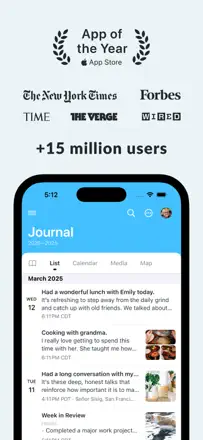
Day One is the most mature journal in its category: multiple journals, search across years of entries, reliable export, rich formatting, and photos. The product is not declining technically but in trust. Aggressive monetization of AI features in the Gold tier and persistent upgrade prompts frustrate loyal paying users.
評価点:Search across the entire entry history with attached photos going back 8-plus years works flawlessly and turns the journal into a personal knowledge base.
不満点:Constant pop-ups pushing the Gold upgrade annoy even Silver subscribers and destroy the feeling of a private space.
向いている人:Serious journalers and people who have kept a diary for years and value reliable export
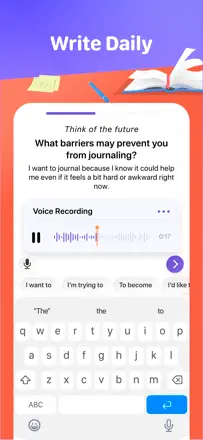
Prompted Journal wins on prompt variety and the absence of ads: users come back because every day brings a fresh question, not the same "what are you grateful for." The weak spots are technical issues when editing past entries and a limited number of free prompts.
評価点:A library of 200 preset questions with the option to add your own eliminates the "I don't know what to write about" block even for people who dislike journaling.
不満点:When the free prompts run out, the flow stops abruptly, and without new questions the app loses its main value.
向いている人:Those who want a reflection practice but need an external question as a starting point
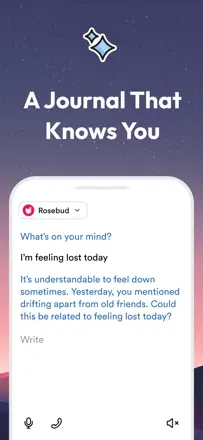
A voice journal with surprisingly deep AI analysis: people note gaining insights about themselves faster than they did in years of therapy. Transcription occasionally freezes and notifications can duplicate.
評価点:The AI detects behavioral patterns in voice recordings and asks precise follow-up questions.
不満点:Audio transcription sometimes stalls for several days, breaking the journaling rhythm.
向いている人:Those who find it easier to speak than to write and want to better understand themselves
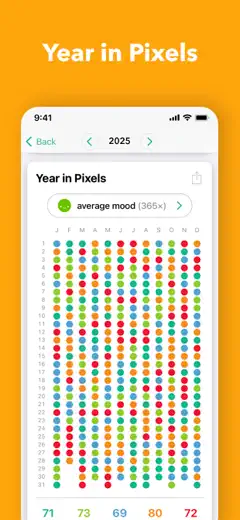
Moodistory keeps users coming back for years through its simple check-in, color mood scale, and the ability to attach photos to memories. The limitation is not the product itself but a fairly narrow emotion palette that does not capture nuanced states.
評価点:A color mood ribbon with photos turns the past year into a tangible emotional history.
不満点:The available emotions are limited and do not cover complex states like anxiety or mixed feelings.
向いている人:Those who want a simple visual picture of their mood month by month
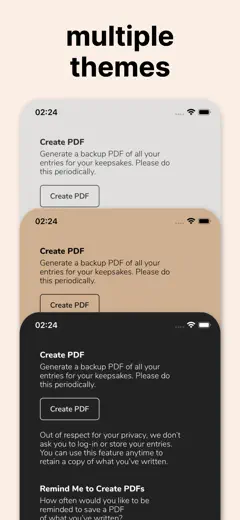
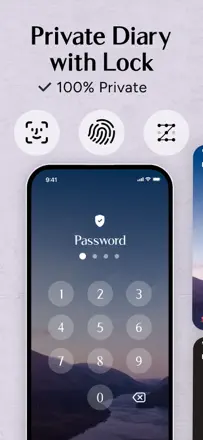
A simple password-protected diary with theme customization and free access to most features. The audience is mostly teenagers who are fine with the low barrier to entry.
評価点:A lock that engages when leaving the app plus flexible theme customization without needing to pay.
不満点:No mood chart, no writing prompts, and no analytics. It is a plain notepad, not a reflection tool.
向いている人:Teenagers who want a personal diary with a password
Bears Gratitude wins on illustration quality and removing friction from journaling: a short entry plus a bear illustration matching the mood. Long-term users (3 years) note stability and the value of a one-time purchase, which is rare in this market.
評価点:The bear illustrations for each entry make returning to the diary an aesthetically pleasing and cozy ritual.
不満点:Navigation through entries is swipe-only, which is awkward when you want to quickly find something from the past.
向いている人:Those who want to briefly record gratitude and good moments from the day
A newer app with AI feedback on entries, audio and video support, and a variety of prompts. Users appreciate the accessibility and prompts, but the AI still produces surface-level summaries rather than deep analysis.
評価点:Writing prompts that help you get started when you do not know what you are feeling.
不満点:You cannot edit a saved entry, and AI summaries take hours and amount to a paraphrase.
向いている人:Those who are just starting to journal and want gentle prompts for reflection
A reliable photo diary with excellent search and a monthly calendar view, with stable sync. The main product flaw: photos can only be inserted at the end of an entry, not inline.
評価点:A calendar cover with photo thumbnails for the month gives an instant visual overview of your life.
不満点:Photos cannot be placed at an arbitrary point in the text; they always appear as a separate block.
向いている人:Visual chroniclers who want to remember life through photographs
Bear remains one of the best note-taking apps in the Apple ecosystem: fast, beautiful, with powerful tagging and clean markdown. As a diary it only works if users build the structure themselves, and data occasionally gets lost during updates.
評価点:Eight years of stable performance with a consistent experience across all Apple devices and quick sync without extra setup.
不満点:The absence of a traditional folder hierarchy and mandatory tag-based organization puts off users who think linearly.
向いている人:Those who write notes and keep a journal in markdown and want a beautiful tool in the Apple ecosystem
Being Me offers a structured approach to journaling: morning and evening prompts, habit tracking, goals. Many users stick with it daily for months. The weak spot is an interface that feels cluttered in places, and the mobile-only format limits those who want to write at length.
評価点:Ready-made morning and evening prompts make it easy to start even for those who have never kept a journal.
不満点:Mood analytics are thin: the app collects data but shows almost nothing in the way of patterns or trends.
向いている人:Beginners who want to build a journaling habit with the help of structure
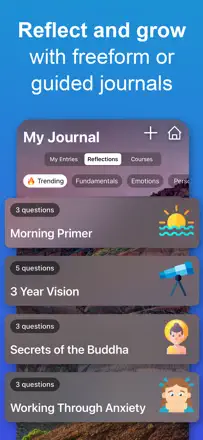
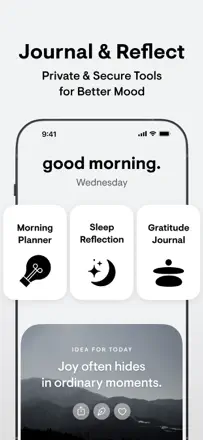
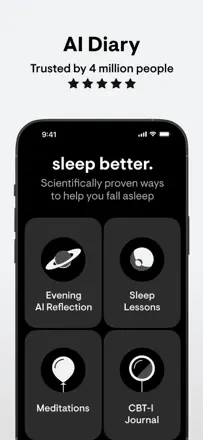
Stoic philosophy fits the daily reflection format well, and the free-writing space is valued by long-time users. Prompts repeat, AI feedback is shallow, and cross-device sync is unreliable.
評価点:The minimal design and the idea of writing without judgment help people regularly express their thoughts.
不満点:Prompts loop quickly and stop being surprising.
向いている人:Those looking for a daily self-observation practice in the spirit of stoicism
365 Gratitude builds a gratitude practice through daily stories, prompts, and mini-tasks. Many users stick with it for a year or more and report a real shift in mindset. The main weakness is content that sometimes repeats and an interface that is small and hard to read on a phone.
評価点:A daily story and a specific reflection question make it easier to get into the right headspace than staring at a blank page.
不満点:Almost no mood pattern analytics: the app motivates but does not show how your state evolves over time.
向いている人:Those who want to build a daily gratitude practice with ready-made content
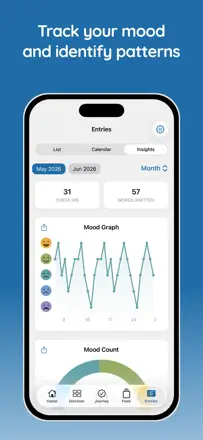
One of the few trackers that genuinely links mood to specific factors like sleep, physical activity, and thoughts, helping users see patterns rather than just logging data points.
評価点:Charts showing the connection between mood, sleep, and activity provide concrete feedback that is easy to discuss with a therapist.
不満点:Periodic connectivity issues make the app unavailable for days at a time and break ongoing streaks.
向いている人:Those working with a therapist who want to systematically track how habits affect their emotional state
This tracker handles the task of logging mood patterns in bipolar disorder well, thanks to simple daily input and weekly visualization. The parameter set is limited and there is no emotion customization.
評価点:Simplicity that means the tracker actually gets used every day rather than abandoned after a week.
不満点:The state range is narrow: only a spectrum from depression to euphoria, with no irritability, anxiety, or mixed episodes.
向いている人:People with bipolar disorder and their families who want to track dynamics before a doctor's visit
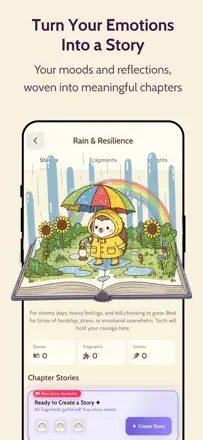
Tochi stands out with its "mood as story" concept organized into life chapters, making journaling feel more meaningful. The visual language of a hedgehog character and colored orbs encourages regular use, though moving basic features behind a paywall frustrates loyal users.
評価点:Organizing entries into life chapters turns chaotic emotions into a coherent personal narrative.
不満点:After recent updates, features that used to be free moved behind a subscription without any new capabilities being added.
向いている人:Those who want to see their emotions as a story rather than just log entries
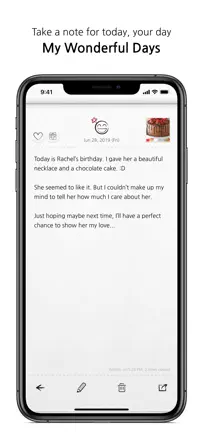
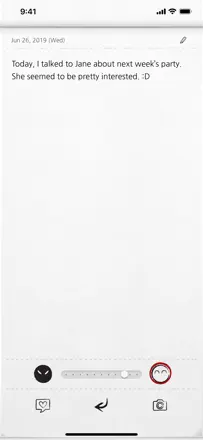
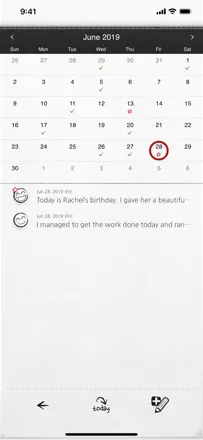
My Wonderful Days has worked as a simple daily diary for over ten years and keeps its audience through habit and a comfortable design. Key limitations: the mood indicator is incomplete (no sad emotions), the interface is dated, and data occasionally gets lost after crashes.
評価点:Users have kept a diary for years and value how low-friction it is: open it, write, close it, no extra steps.
不満点:The mood slider only covers a range from neutral to angry, ignoring the entire spectrum of sadness and anxiety.
向いている人:Those who want a simple daily journal without extra features and do not need mood analysis
A functional cross-platform diary with Markdown support and iCloud sync that works reliably for most people. Sync conflicts when writing from multiple devices simultaneously, and onboarding does a poor job explaining the basics.
評価点:Markdown formatting and stable sync between iPhone and Mac without any extra configuration.
不満点:When writing on two devices back to back, sync conflicts and entries get mixed up.
向いている人:Fans of clean text journaling in the Apple ecosystem
Grid Diary offers a genuinely flexible grid format with good prompts and photo support, but cross-device sync has been broken for a long time and spoils the experience for paying users. Long-term users love the concept; newcomers stumble over technical issues.
評価点:A structured grid format with configurable prompts helps you write every day without facing a blank page.
不満点:Sync between the phone and other devices is unreliable and loses entries.
向いている人:Those who want to ask themselves the same questions every day
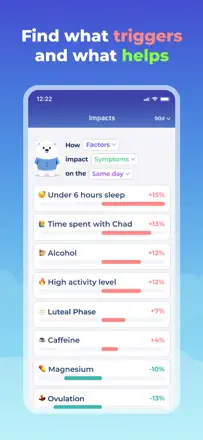
Bearable excels as a symptom tracker for people with chronic conditions: flexible setup, correlations between parameters, and genuinely useful at doctor appointments. The main weakness is an overwhelming interface, a high entry barrier, and new updates that periodically break things that worked before.
評価点:The ability to trace the link between food, sleep, and how you feel, then show the doctor a real picture over a month.
不満点:Too many steps per entry: many users quit within a week from setup fatigue.
向いている人:People with chronic illnesses who keep a medical diary for their doctor
The AI conversation partner genuinely helps formulate thoughts and deepen reflection, but users with intensive use quickly hit message limits and response quality is inconsistent.
評価点:The conversational format helps you get thoughts out and structure them without fear of judgment.
不満点:The AI occasionally mixes up facts from past entries and tends toward excessively enthusiastic reactions to any event.
向いている人:People who need an accessible conversation partner for reflection at any hour
Reflection offers real value: structured prompts, voice input, and sync between iOS and web help build a habit. AI reflection is still limited to paraphrasing, and the app is still rough around the edges in terms of reliability.
評価点:Structured prompts and an AI coach help people who could never stick to a diary write every day.
不満点:Voice recordings sometimes disappear, and import from other apps has been broken for several months.
向いている人:Those who want not just to record but to work through their thoughts with guiding questions
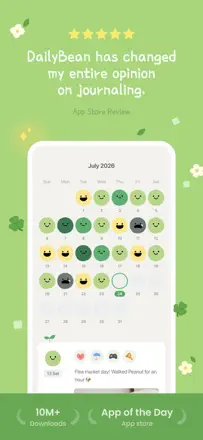
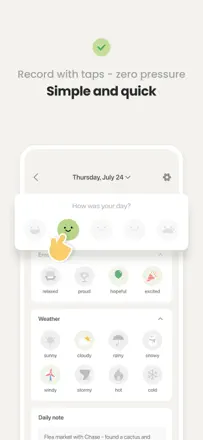
DailyBean is the most visually appealing minimalist mood tracker in this category: pick an emotion for the day, add a note, view analytics. The core works great, but an ad after every saved entry breaks the journaling rhythm.
評価点:Themed skins and the small animated bean make the daily mood check-in a genuinely pleasant ritual.
不満点:An ad after every saved entry destroys the feeling of a smooth, quiet journaling experience.
向いている人:Those who want to log their mood simply and beautifully without many words
Orca (formerly Happyfeed) is a gratitude diary with photos and a social layer for small groups. The low barrier to entry and the daily three-good-moments ritual work. The app periodically loses entries, and switching to a new device often means losing your history.
評価点:Three good moments from the day plus a photo: a simple ritual that genuinely starts the habit of noticing good things.
不満点:You cannot edit an entry after saving it, and there is no search through past entries, so it is a diary you cannot go back to.
向いている人:Those who want a simple daily gratitude ritual, ideally shared with people close to them
Simple Diary honestly delivers on its promise of simplicity: quick input, fingerprint lock, photos. Users return and stay for years, but losing entries during crashes with no proper backup is a serious flaw.
評価点:A minimal interface with no extra buttons lets you open the app and write in a few seconds.
不満点:Entries occasionally disappear with no way to recover them, and there is no real cross-device access.
向いている人:Those who want to write every day without any extra setup
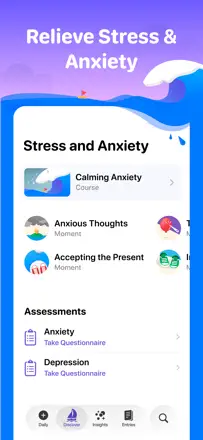
The CBT structure helps identify cognitive distortions, and therapists actively recommended the app to clients. After a redesign, features began conflicting with each other, the AI chat responds with platitudes, and it occasionally switches to the wrong language.
評価点:The step-by-step CBT thought breakdown gives real insights into your own patterns.
不満点:Being forced to choose a streak length before writing feels like pressure rather than support.
向いている人:Those dealing with anxiety who want structured CBT self-help
Finch is more of a self-care Tamagotchi than a journal: you set goals and "feed" the bird with your achievements. The core mechanic works and keeps people going for years, but recent updates (promotional events, inventory bugs, removed features) are slowly dismantling what made it loved.
評価点:Daily quests and the pet growing alongside you provide the small dopamine push that helps many people not give up on their habits.
不満点:The developers are increasingly replacing content with paid events and promotional collaborations, while removing beloved old features without warning.
向いている人:Those who need a game loop for motivation rather than a text diary
A simple gratitude journal with good prompts and a vision board. Serious data loss for several users and complete silence from support badly undermine trust.
評価点:Themed challenges and the vision board keep users engaged with the practice every day.
不満点:A hard streak reset after missing one day works against the user rather than for them.
向いている人:Those who want a short morning gratitude practice
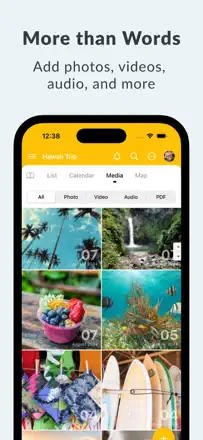
Journey offers a rich set of formats: text, photos, voice, templates, and cloud sync. It suits those who want a life archive across all devices. Weak spots are navigation that is sometimes unclear and sync that occasionally loses entries.
評価点:Entries are accessible from any device and saved for years, giving the feeling of a genuine personal archive.
不満点:No mood analytics or pattern insights: the app stores your data but does not help you understand it.
向いている人:Those who keep a detailed personal archive with photos and want access everywhere
A thoughtful structure for different types of journals in one place genuinely helps build a writing practice, though some users lose account access after updates.
評価点:You can keep morning pages, a gratitude journal, and a weekly review in one app with different templates.
不満点:No way to organize entries into folders or by topic, which is inconvenient when running several parallel journals.
向いている人:Those who want to combine several writing practices in one structured space
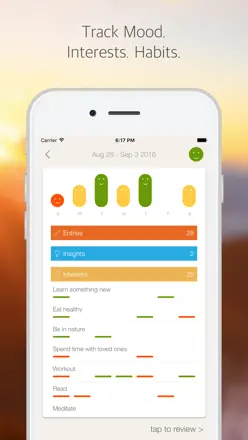
A polished diary with a weekly mood rating and an interests tracker that many people have used for years. Development is effectively frozen: no export, no Mac support, and the journal grows without limit and can take up several gigabytes.
評価点:A weekly mood snapshot and interest checkboxes give structure to reflection without extra work.
不満点:There is no data export at all; the diary accumulates locally and can balloon to 5 GB.
向いている人:Disciplined journalers prepared to live with abandoned development in exchange for a comfortable interface
The card format suits those who want to see a day on one screen and quickly browse through the calendar. Tagging works, but formatting is not saved and support has been frozen for several years.
評価点:Minimalism without forced "therapy" features and powerful tag search for people with a large archive.
不満点:Formatting (bold, italic) is lost on save, and the app has not been updated in a long time.
向いている人:Those who have kept a diary for years and want a simple chronicle without extra features
1 Second Everyday delivers a unique video diary idea built from one-second daily clips, and for those who have kept at it for years it becomes a genuinely valuable life archive. Recent interface updates made navigation less intuitive, and a regression in export quality disappointed long-term users.
評価点:An annual video reel made from one second of each day gives a sense of a year lived that no other diary format can match.
不満点:The new interface is confusing, and high-resolution export has regressed: 60fps was removed for the already-paid Pro plan.
向いている人:Those who want a video chronicle of their life rather than a text or mood diary
One of the few mood trackers with a real CBT mechanic: you identify a cognitive trap and challenge it. It works as a therapy supplement, but widgets have been broken for over a year and period progress is only visible in the paid version.
評価点:The step-by-step thought breakdown through cognitive traps helps where simply rating your mood does not.
不満点:Widgets have been broken for over a year; mood analytics for a given period is locked behind a paywall.
向いている人:Those who have done or are doing CBT therapy and want to practice the techniques on their own
Apple's built-in app with solid ecosystem integration: photos, location, reminders out of the box, and no subscription. But the editor is rough: handwritten entries disappear, undo is broken, and multi-device sync is unreliable.
評価点:Being completely free with deep iPhone integration makes starting a journaling habit almost frictionless.
不満点:The editor is unstable: Apple Pencil entries disappear and cross-device sync loses data.
向いている人:Apple users who want to start journaling without downloading anything extra
Cute personalized emoji moods and Face ID protection work well as a concept. Chronic data loss when switching phones and weak backup make the app unreliable for long-term journaling.
評価点:Creating your own emoji moods makes tracking feel alive and personal.
不満点:When moving to a new phone, entries disappear and cannot be recovered.
向いている人:Those who want a visual and playful mood diary on a single device
The app honestly does one thing: it reminds you to write three gratitudes a day and shares them with a close circle. That is enough for people with depression and anxiety as a daily practice, but the product is still rough.
評価点:A bedtime reminder notification and the ability to share gratitudes with a circle of people.
不満点:The streak resets without warning, you cannot fill in a missed day, and the family plan works inconsistently.
向いている人:Those building a morning or evening gratitude practice
Diaro is a mature cross-platform diary with folders, tags, location, and voice input. It works well as a personal archive with organization. The app looks dated, develops slowly, and password locking is unreliable.
評価点:Folders and tags for organizing entries: the only way to really structure years of diary notes.
不満点:No mood tracking, analytics, or prompts at all: just a text repository with no feedback.
向いている人:Those who have journaled for years and want a reliable cross-platform archive
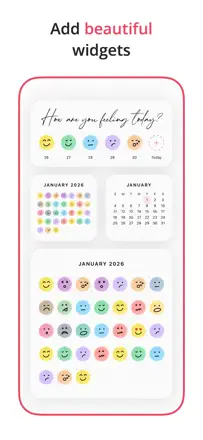
A lightweight emoji mood tracker with widgets that handles daily emotion logging well and lets you scroll through past entries, but the sparse free emoji set limits how precisely you can express yourself.
評価点:A seven-day mood display widget on the home screen makes patterns visible without opening the app.
不満点:The basic emoji set is too small for capturing nuanced moods, and the extended palette is locked behind a subscription.
向いている人:Those who want to log their mood concisely through emoji without deep text analysis
A flexible tracker with powerful customization and good data history, but export relies on Google OAuth and periodically breaks, and saving entries is unreliable.
評価点:Wide field customization and clear charts spanning years of observations.
不満点:Data export regularly stops working and entries occasionally disappear without warning.
向いている人:Methodical habit and event trackers with a long time horizon
Halo lowers the barrier for people with ADHD and procrastination: prompts and the "moment" structure help you get started. Free-form writing is limited, and the AI companion restates what you wrote rather than deepening the reflection.
評価点:Prompts help people with executive dysfunction start writing without getting paralyzed by the blank page.
不満点:Free entries outside the "moment" do not support metadata: no weather, activity, or mood rating.
向いている人:Those who have long wanted to journal but could not start without external structure
Reflectly offers a structured check-in through questions and mood tags, which is more approachable than a blank page for people who struggle to start writing. The main problems are unstable login that wipes two years of data and broken widgets for paying users.
評価点:Daily question prompts help those who do not know where to start and gently build a reflection habit.
不満点:Login breaks and locks out years of entries, and home screen widgets periodically stop working.
向いている人:Those who need guiding questions rather than a blank page
The morning-and-evening format with fixed prompts builds a solid reflection habit, and the product has a loyal core with 7-9 years of use. A serious problem: entries disappear without warning during updates and support is slow to respond.
評価点:Splitting the day into a morning and evening session structures the day and makes reflection a predictable habit.
不満点:The mood tracker does not function properly, and prompts do not adapt to the user's schedule.
向いている人:Those who want a short morning and evening positive reflection practice
Habit Tracker is a clean and visual habit tracker with pleasant animations and widgets, but the six-habit limit on the free tier hurts the most basic use case. Mood tracking is there, but limited to one check-in per day, which feels thin.
評価点:Swiping to mark a habit done and the audio feedback give a satisfying sense of progress.
不満点:Only one mood entry per day and a hard cap on the number of habits make the app feel incomplete without the paid version.
向いている人:Those who need a minimalist tracker for three or four key habits
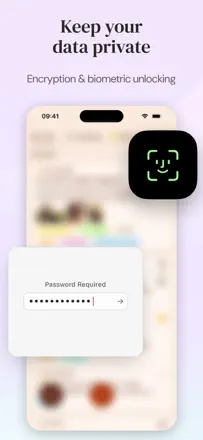
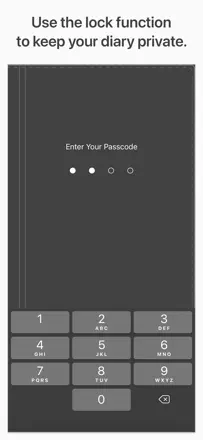
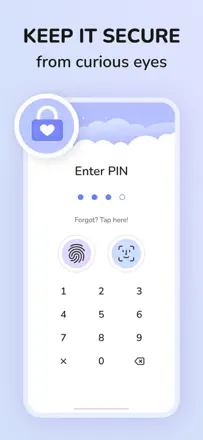
Those who care about privacy appreciate the reliable lock and simple entry format. Data loss when switching devices and no support make the app risky for storing personal entries.
評価点:Face ID and PIN lock give confidence that entries stay private.
不満点:No default account or cloud backup, so switching to a new phone often means losing everything.
向いている人:Those who want a simple private diary without extras
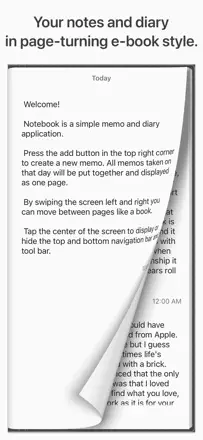
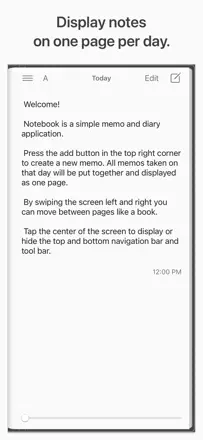
A simple chronological diary with no clutter: entries group by day, there is search, voice input. The main and growing problem: banner ads now cover the text.
評価点:Multiple entries from the same day are gathered on one page, like in a paper diary.
不満点:Ads cover all the text when the entry opens, and there is no way to categorize notes.
向いている人:Those who want a minimalist diary with no account or cloud
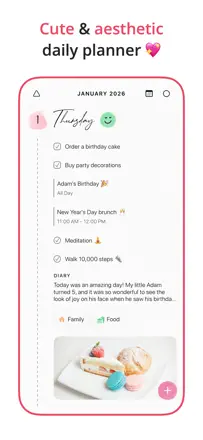
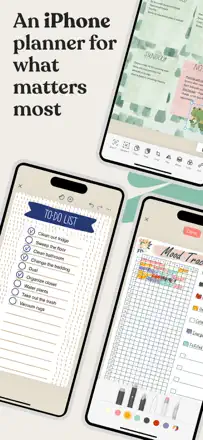
Floret shines as a visual planner: beautiful themes, well-structured day view, responsive support. As a diary it is secondary and offers no reflection or mood features, and the number of free event slots is critically low without a subscription.
評価点:The visual polish and well-thought-out visual hierarchy make it easy to stay in the system and return to the planner every day.
不満点:A limit of two or three events without paying makes the free version a decorative showcase rather than a working tool.
向いている人:Those who want an attractive daily planner and are willing to pay for full access
A simple private diary with a lock and offline mode that covers the basic need: writing without fear that someone will read it. Photos freeze and customization is minimal.
評価点:Users value the password lock and offline operation as their main source of psychological safety.
不満点:Almost no customization: one cover, no stickers, very few design options.
向いている人:Teenagers and those for whom privacy matters more than features
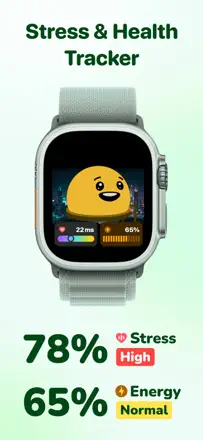
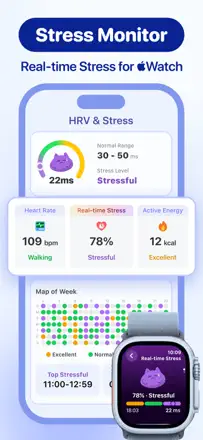
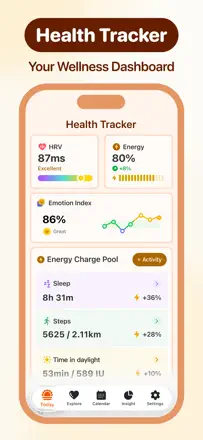
Moodpress works well alongside an Apple Watch and draws users in with its visual design, but without the watch, half the features become useless. The diary component is basic; the focus is on tracking physical metrics, not emotions.
評価点:The bright design with animations and Apple Watch integration turn the daily check-in into a small ritual.
不満点:Without an Apple Watch, almost everything related to stress and activity tracking stops working.
向いている人:Apple Watch owners who want to see mood alongside physical metrics
Zinnia is a digital scrapbook planner with broad creative options: stickers, templates, Apple Pencil, various covers. As a journaling tool it is weak due to an unstable editor and aggressive moving of basic assets behind a paywall.
評価点:A rich template library and Apple Pencil support turn journaling into a creative activity for those who like to decorate their pages.
不満点:The editor occasionally deletes written text on exit, and most visual elements require a subscription.
向いている人:Creative people who want a digital scrapbook rather than just a place for text
A functional diary with a print feature and a comfortable interface, but the story of previously free entries being suddenly locked behind a paywall severely damages user trust.
評価点:The print feature and the ability to keep daily work notes in a structured format.
不満点:No keyword search and sync between iPad and iPhone is unreliable.
向いている人:Adult users who keep a regular diary and occasionally want to print it
A simple diary with a lock, photos, and stickers aimed at teenagers. It works as a personal space for entries, but has no depth: no mood analytics, no smart prompts, and the format does not grow with the user.
評価点:PIN and Face ID built into the app give the feeling that it is genuinely personal.
不満点:No processing of what is written: just a text repository with no trends, patterns, or feedback.
向いている人:Teenagers who need a protected personal diary
An ultra-minimalist password-protected notepad that appeals to those who want to write without distractions. The single fatal product flaw: no password recovery and no cloud backup, so users lose years of entries.
評価点:No ads at all and the simplest possible interface let you focus entirely on writing.
不満点:There is no password recovery, and forgetting your PIN destroys the entire entry history.
向いている人:Those who want the simplest possible diary with a lock and accept the risk of data loss
Before a recent update this was one of the best weekly planners with a convenient week overview. After the redesign, sync is broken, duplicates entries, and the free horizon is cut to one week.
評価点:Seeing the whole week on one screen and searching through past entries.
不満点:Cross-device sync requires a manual tap and creates duplicates; notes cannot be recovered after deletion.
向いている人:Those who plan week by week rather than month by month and work from one device
The shared diary concept for couples or families is sound: the questions genuinely help people connect across distance. But an aggressive onboarding with a forced rating before first use and an abrupt move to a paid model undermine trust.
評価点:For long-distance couples, daily questions create a shared ritual and give a reason to talk about something real.
不満点:The number of journals directly affects the subscription price, so active users end up trapped: the more they used it, the more it costs to continue.
向いている人:Couples or close people at a distance who want to keep a living conversation through questions
The simple gratitude diary works for those who have been in it for years, but a mass switch to a new subscription model cut longtime users off from their own entries.
評価点:A minimalist format with three questions a day does not overwhelm and builds a durable gratitude habit.
不満点:No grouping of entries by tag as a unified list, and prompt customization is only available in the paid version.
向いている人:Those who want a simple daily gratitude ritual with no extra features
A simple and accessible diary with a PIN and font choices, suitable for basic daily writing. Critical issue: no cloud backup, so switching phones wipes all entries.
評価点:A simple PIN instead of a password and minimal screens on launch.
不満点:Entries are stored only locally with no backup; replacing your phone resets the entire diary.
向いている人:Beginners in journaling who need the lowest possible barrier to entry
Bujo takes the bullet journal aesthetic and makes it digital, but stability is lacking: entries disappear, sync lags, and the app periodically refuses to open.
評価点:Setup flexibility and multi-day tasks with automatic rollover appeal to bullet journal fans.
不満点:Data gets lost during crashes and after restoring from an iCloud backup.
向いている人:Bullet journal fans willing to live with occasional glitches in exchange for a digital format
The visual mood bubble concept with multiple colors is original, and the AI feedback is appreciated by those who use it. Constant lag, freezes, and crashes make daily use miserable.
評価点:Visualizing mood as a colored bubble gives a vivid sense of the day's emotional state.
不満点:The app lags so badly that users give up journaling simply from waiting for the screen to load.
向いている人:Those who want a beautiful visual mood tracker and can live with unstable performance
Momento was built on the unique idea of aggregating personal social media data into a diary, but most integrations have been broken and unsupported for years. It still works as a plain text journal without social feeds, but the feeling of an abandoned product makes it hard to trust as a life archive.
評価点:The idea of pulling posts from different social networks into a single memory feed was genuinely original.
不満点:Social media integrations have been broken for years, data export does not work, and the developer does not respond.
向いている人:Those who keep a text diary and do not count on social media integrations
A social network for venting emotions that once worked well but has been without support for years: login breaks, comments do not send, and blocks do not work. The product survives on the inertia of its old audience.
評価点:An anonymous community where strangers support each other through difficult moments.
不満点:No data export, moderation does not function, and toxic users are only nominally blocked.
向いている人:Those who want to vent anonymously and get a response from strangers
The idea is solid: a cat guru, habit tracker, and life wheel in one place. In practice, endless tutorial animations and an unfinished engine get in the way of reaching the actual tool.
評価点:Gamification with points and cat animations keeps users in the habit longer than they expected.
不満点:Onboarding is lengthy and cannot be skipped; the AI cat has not been updated since 2022, and you cannot attach photos.
向いている人:Those who want a gamified self-improvement format and can forgive instability
Vision Board Perfectly Happy is closer to a goal visualization tool than a mood journal. The core vision board creation feature works unreliably, the affirmation audio feels mechanical, and the app has almost nothing to do with mood tracking or reflection.
評価点:Quick creation of a video vision board from personal photos directly on the phone, no computer needed.
不満点:No mood tracking and no reflection tools: it is an inspirational slideshow, not a self-knowledge instrument.
向いている人:Those who believe in goal visualization and want a daily motivating video
The web version of Penzu works decently and offers a feature that reminds you of past entries from the same date in previous years, but the mobile app has not been updated in a long time and consistently breaks during voice input and sync.
評価点:Annual reminders about entries from the same day in past years motivate you to come back to the diary.
不満点:Voice input reliably cuts out every few seconds, making it practically unusable.
向いている人:Those who journal primarily through a browser and value the retrospective reminder feature
The classic version of the app with a grid diary format that developers have effectively abandoned in favor of Grid Diary 2. Export is blocked, previously purchased features disappear, and the app crashes on launch.
評価点:The grid structure with editable questions helped turn writing into a habit without unnecessary decoration.
不満点:The product is frozen: features degrade and data cannot be exported without moving to the new app.
A beautiful digital planner with a large template selection that is almost entirely locked behind a paywall. Three pages per journal for free, $40 per month or $100 lifetime with no way to keep your data after the subscription ends.
評価点:A rich selection of ready-made planner templates with customizable colors and covers.
不満点:Data disappears when the subscription ends, and the free mode is capped at three pages per journal.
向いている人:Those who want an attractive digital planner and are prepared to pay monthly
Cute aesthetics and stickers attract a young audience. Data loss, freezes, and forced ads to unlock features make the product unreliable even as casual entertainment.
評価点:Decorative pages with stickers and backgrounds make for a visually pleasant diary.
不満点:Data disappears without warning and login between devices is unreliable.
向いている人:Children and teenagers who want a pretty diary and do not plan to store entries long-term
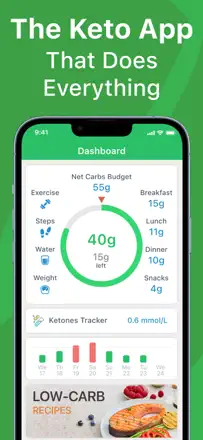
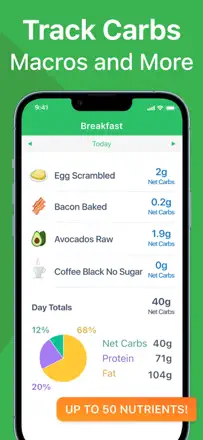
This is a keto diet food tracker, not a mood diary. It has almost nothing to do with the journaling or mood-tracking category: no thought entries, no emotion tracking, no reflection. It works adequately as a carb counter, but the advertised analytics features require a subscription.
評価点:Convenient food search and a clear macro counter for the keto protocol.
不満点:No diary or mood tracking features whatsoever: it is simply a food log.
Diary - Private Note is visually attractive, but the key advertised feature, the password lock, is behind a paywall, which misleads users. You cannot scroll back through a long entry, which is a fundamental usability failure for a diary.
評価点:A visually appealing notebook-page design creates the mood of a real diary.
不満点:A long entry cannot be scrolled and re-read from the beginning; text goes off-screen with no way to return.
向いている人:Those who want a beautiful virtual diary and are willing to pay for basic features upfront
The one-second-a-day concept is compelling, but the feature for compiling a final video breaks precisely when it is needed most. Users consistently lose an entire year of memories.
評価点:The simplicity of recording one moment a day builds the habit effortlessly.
不満点:Compiling the final video regularly fails or freezes, making the app's main value unreachable.
向いている人:Those who want a lightweight video diary without worrying about the final edit
A locked diary where the free user can create only 3 entries, after which every action is interrupted by an ad or a subscription prompt. The core function is blocked too early for the app to be genuinely useful.
評価点:Simple password protection with font options appeals to those who manage to get into the editor.
不満点:A 3-entry limit makes the app useless as a diary: reflection requires regularity, not a single session.
向いている人:Nobody; the limitations kill the habit before it can form
The video diary idea resonates with people who find it easier to talk than to write. But videos regularly disappear, the interface freezes during recording, and pricing is opaque to a degree that some users call deceptive.
評価点:Speaking aloud and then rewatching yourself a month later gives a sense of personal therapy without a middleman.
不満点:Video recordings vanish after updates and support does not restore lost data, making the app a risky place to store memories.
向いている人:Those who process emotions through speech rather than writing and want to see themselves over time
This is a decorative diary toy rather than a mood tool: users themselves call it a "game" and praise the stickers and colors. There are no features for mindful journaling here.
評価点:A bright and cozy interface with collages and stickers; it is simply pleasant to open.
不満点:No reflection tools at all: no templates, no mood labels, no reminders.
向いている人:Children and teenagers who want a digital version of a pretty notebook
After the rebrand from Journey to Journal, the app lost years of user data and key planner features, and trust in it as a repository for personal entries has been badly damaged.
評価点:A minimalist Moleskine-style design creates a pleasant notebook feel.
不満点:There is no way to browse a list of all past entries; navigation through the diary is only by calendar.
向いている人:Those who value the Moleskine brand aesthetic and want a simple digital notebook
The interface is clean and extremely simple, but the payment gateway is broken: users pay for storage and still get blocked. No lock, no ability to back-date an entry.
評価点:A minimalist interface with no noise works for short travel notes.
不満点:No password protection and no way to add an entry for a past date.
向いている人:Travelers who want a no-setup notepad, if the payment issue gets fixed
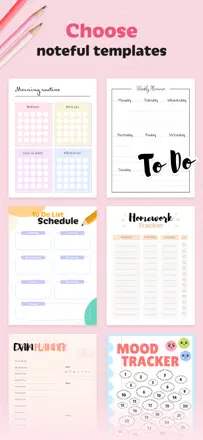
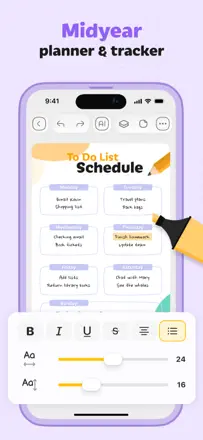
Essentially a beautiful template viewer: without a subscription you get three covers, one template per section, and a handful of stickers. The pencil tool for handwritten notes is awkward because the toolbar covers a quarter of the page.
評価点:Visually beautiful planner templates with the option to decorate a spread with stickers.
不満点:Almost nothing works without a subscription, and handwritten input is uncomfortable due to the toolbar.
向いている人:Those willing to pay for an aesthetic digital planner and not expecting a rich free version
The app has been around for a long time and retains its audience by inertia, but the systemic problem is clear: ads interrupt writing and erase text, and data disappears without warning. Writing here is not safe.
評価点:Users praise the simple interface and feminine design that invites personal journaling.
不満点:Ads insert themselves mid-entry and reset unsaved text, making the journaling process itself unreliable.
向いている人:Those who want a free diary and accept the risk of losing entries
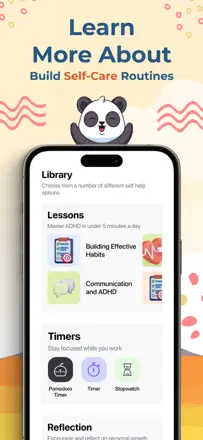
The idea of caring for a pet as motivation for habit tracking is appealing, but the app regularly loses progress, purchased items disappear, and without a subscription functionality is nearly zero.
評価点:The virtual panda pet creates an emotional attachment and motivates returning every day.
不満点:Progress and purchased room items periodically reset without warning, devaluing accumulated effort.
向いている人:Teenagers who need gamified motivation for basic journaling habits
Chronicle looks like an abandoned product: the last update was six years ago, the developer does not answer emails, and on recent iOS versions the app fails to open and destroys years of entries. Relying on it as a main diary is risky.
評価点:Users with a decade of history praise the simple and unobtrusive interface for honest personal journaling.
不満点:The app has not been updated for years and stops opening after iOS updates, destroying all entries.
向いている人:Not recommended to anyone in its current state
An attractive collage diary with stickers aimed at a very young audience. Entries occasionally vanish without explanation, which is a fundamental failure for a diary.
評価点:The collage editor with stickers and personal photos looks colorful and fun.
不満点:Entries disappear on reinstall or after a day change with no backup mechanism.
向いている人:Children under 12 who want a pretty digital diary
A children's visual diary with a lock that is advertised with drawing and stickers but delivers a plain text editor with heavy ads and unreliable saving.
評価点:The password and lock feature gives children a sense of privacy, which is valuable in itself.
不満点:Ads interrupt every screen transition and entries sometimes disappear on exit.
向いている人:Young children for whom the idea of a locked personal diary is what matters
There is a pleasant design and voice notes, but this is effectively a notepad with no lock: the core privacy feature is paid, and the editor offers nothing beyond standard text fields.
評価点:A pleasing visual style and low friction on first launch.
不満点:No journaling structure at all: no labels, no reminders, no history view by day.
向いている人:Teenagers who want a pretty notepad with no depth
The idea of a video diary for those who struggle to talk to people was genuinely valuable in the Talkbook version. The rebrand destroyed users' saved memories and moved video recording behind a paywall, leaving only the shell of the concept.
評価点:Seeing yourself in recordings from a month ago and noticing how your emotional state changed gave a real sense of reflection.
不満点:After the rebrand, video recording became a paid feature and all existing user recordings disappeared without warning and with no way to recover them.
向いている人:Those who want to keep a video diary if they are willing to start from scratch and pay for the core feature
The app aggressively requests a rating before the user has had a chance to explore it, which makes the entire rating meaningless and masks the product's real quality.
評価点:Basic mood logging and anxiety-relief elements appeal to those who actually make it to the content.
不満点:The rating prompt fires immediately after install, before the user can even finish onboarding.
The app is effectively broken for its core function: an ad loop prevents creating a second entry, text does not save, and there is no backup. The lock exists, but the contents are inaccessible.
評価点:The lock interface appealed to those who found the app before the problem emerged.
不満点:No cloud backup; data is lost on reinstall.
向いている人:No specific audience given the app's current state
A diary positioned as lock-protected, but the lock is only available by subscription. Entries are not saved to the cloud and ads appear every few seconds.
評価点:The pink-and-diamond aesthetic appeals to the target audience.
不満点:The lock that users download it for requires a paid subscription, despite ads promising it for free.
向いている人:Difficult to recommend to anyone in its current form
An anti-stress app with visual toys (slime, bubble wrap) that are almost all behind a paywall. Its real value for mood tracking or journaling is close to zero.
評価点:Tactile mini-games like bubble wrap give an immediate, if superficial, relief effect.
不満点:Almost no tools for journaling or mindful mood tracking.
向いている人:Children and teenagers who want a quick stress-relief toy rather than a diary
Memos is trapped behind a paywall on launch: users cannot close the payment screen and get into the app, iCloud sync breaks with schema errors, and data disappears even for paying subscribers. The product in its current state is non-functional.
評価点:In theory the app offers a media diary with photos and templates, which draws users in from the store screenshots.
不満点:The paywall screen on first launch effectively blocks access to the app even for those who tap "continue without subscription."
向いている人:Difficult to recommend to anyone in the current state
A basic diary with glitter design where written text disappears, there is no iCloud backup, and ads cut into any entry. Functionality does not go beyond a blank page with a password.
評価点:Users value the visual aesthetic and the ability to keep personal entries.
不満点:Text disappears on exit and there is no cloud saving.
向いている人:Children for whom "sparkles" matters more than "saves"
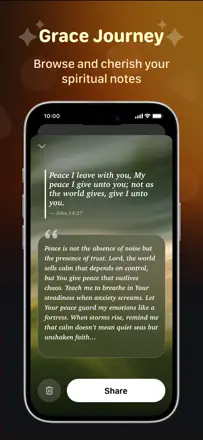
GraceNotes is positioned as a gratitude journal, but the real user experience is a stream of forced ads that prevent reaching any journaling feature. Substantive reviews about diary tools are almost nonexistent.
評価点:The idea of a daily gratitude practice with a religious context finds an audience among people seeking spiritual reflection.
不満点:Forced ads after every action make keeping a diary impossible without the paid version.
向いている人:Unclear audience due to a mismatch between positioning and the app's actual content
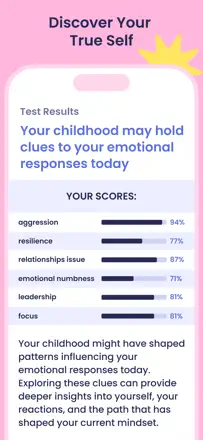
Breeze is a dark pattern wrapped in a mental health app: aggressive ads, a quiz with paid results, and hidden recurring charges after canceling a subscription. There is almost no real product for journaling or mood tracking.
評価点:A few breathing exercise mini-games are described as nice by the handful of people who actually got into the app.
不満点:The business model is built on hidden recurring charges and making it impossible to cancel a subscription through standard App Store settings.
向いている人:Nobody; the app's financial scheme makes it dangerous for users