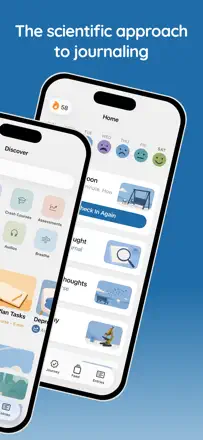
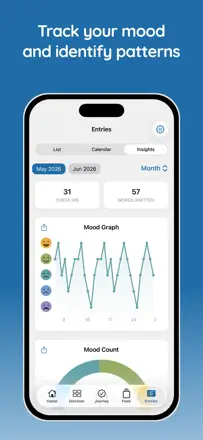
Ces apps sont mentionnées dans le décryptage de cette tâche. Ouvre chacune pour comparer les points forts et les limites. L’ordre de la liste n’est pas un classement d’adéquation.
Rang 4. Note des avis : 73 sur 100. Note sur l’App Store : 4,8★ · 4 176 notes
73sur 100
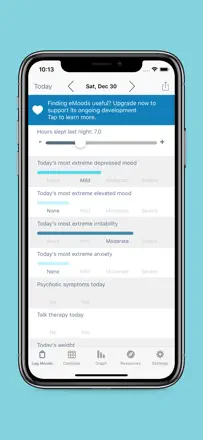
eMoods is built specifically for people with bipolar disorder: it tracks episodes, medications, sleep, and mood in a single daily report that is easy to show a psychiatrist. The interface is neutral and does not overwhelm on bad days. The weak points are unreliable cross-device sync and an export that requires technical know-how.
Points forts : A specialized psychiatrist report that shows weeks and months at a glance.
Reproches : Only four severity levels (none, mild, moderate, severe) which is not enough to describe the full range of states accurately.
Pour qui : People with bipolar disorder who work with a psychiatrist
Rang 17. Note des avis : 64 sur 100. Note sur l’App Store : 4,7★ · 2 208 notes
64sur 100
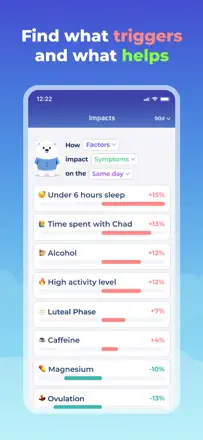
One of the few trackers that genuinely links mood to specific factors like sleep, physical activity, and thoughts, helping users see patterns rather than just logging data points.
Points forts : Charts showing the connection between mood, sleep, and activity provide concrete feedback that is easy to discuss with a therapist.
Reproches : Periodic connectivity issues make the app unavailable for days at a time and break ongoing streaks.
Pour qui : Those working with a therapist who want to systematically track how habits affect their emotional state
Rang 37. Note des avis : 56 sur 100. Note sur l’App Store : 4,7★ · 10 964 notes
56sur 100
One of the few mood trackers with a real CBT mechanic: you identify a cognitive trap and challenge it. It works as a therapy supplement, but widgets have been broken for over a year and period progress is only visible in the paid version.
Points forts : The step-by-step thought breakdown through cognitive traps helps where simply rating your mood does not.
Reproches : Widgets have been broken for over a year; mood analytics for a given period is locked behind a paywall.
Pour qui : Those who have done or are doing CBT therapy and want to practice the techniques on their own
Rang 23. Note des avis : 62 sur 100. Note sur l’App Store : 4,8★ · 5 752 notes
62sur 100
Bearable excels as a symptom tracker for people with chronic conditions: flexible setup, correlations between parameters, and genuinely useful at doctor appointments. The main weakness is an overwhelming interface, a high entry barrier, and new updates that periodically break things that worked before.
Points forts : The ability to trace the link between food, sleep, and how you feel, then show the doctor a real picture over a month.
Reproches : Too many steps per entry: many users quit within a week from setup fatigue.
Pour qui : People with chronic illnesses who keep a medical diary for their doctor
Rang 29. Note des avis : 60 sur 100. Note sur l’App Store : 4,8★ · 29 127 notes
60sur 100
The CBT structure helps identify cognitive distortions, and therapists actively recommended the app to clients. After a redesign, features began conflicting with each other, the AI chat responds with platitudes, and it occasionally switches to the wrong language.
Points forts : The step-by-step CBT thought breakdown gives real insights into your own patterns.
Reproches : Being forced to choose a streak length before writing feels like pressure rather than support.
Pour qui : Those dealing with anxiety who want structured CBT self-help